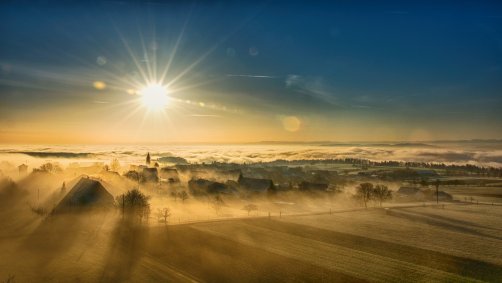
When Trees Dream

By Daniel Haskin

Daniel Haskin

The beauty of life are trees
That turn as sleepy as death
Knocking on hungry doors
Creaking amongst the clouds
That rise above the weather

They sing but refuse to listen
To the turnings of the clock
Bouncing like swift shrapnel
Through rains stream and flow
Longing for Fall’s sparrowed skin

Their leaves roll and crackle
Like a mirage of slivered ghosts
That die on weary windshields
While the Autumn song simmers
Broiling in the red starry night

About Daniel Haskin

Daniel Haskin is a Buffalo NY based poet, writer, musician, visual artist, and illustrator. His chapbooks of poetry include “Amnesia”, “Past Life Invisible”, “The Shallow Sea”, and his newly published work “Picture Book: Love, Death Time, and Assorted Ekphrasis”. He has also been published in various newspapers and international journals. For more information, visit his website www.danielhaskin.com and follow him on Instagram @danielhaskin.

The Outpost

By James Garrison

James Garrison

Just the three of them remained in the outpost: Pierre the sergeant, Andre the new guy from the capital, and Joe the American. Then Pierre schlepped in the girl from the village. Slight, black hair, olive skin, no more than sixteen, a native girl whom Pierre said he had been eyeing since his second week there.

They had been left behind to signal if the Majdi followed the retreating army (a strategic redeployment the captain called it) and marched on the capital—though they knew that the Majdi did not march; his men flowed like the first fingers of an incoming tide, slipping silently around rocks and dunes and along crevasses. So these three soldiers were the captain’s eyes and ears in the great gray barrens of rock and sand, making their reports over a battered transmitter, alone in an abandoned stone fort on a promontory overlooking the desert.

There were still lights in the capital. From their high outpost, they could see the glow at night, just on the horizon, many miles in the distance.

They would remain for only twenty-four hours more. The retreating army would be in place and secure by then, not exposed to attack in the vast wilderness. For their escape, the captain had given them a good jeep and enough water and fuel to reach the capital. Two other jeeps were also there. Discarded from a prior war, they stood in the mid-stages of decrepitude on the slope below the fort.

So they had fuel and spare parts and enough water to make their exit when the time came—except for the girl, whom they would have to leave behind. “That was unfortunate,” Pierre said. Since the Majdi’s men would use her according to their custom and dispose of her as the offal of infidels.

The place itself was bleak, desolate. Andre, in his fresh uniform, his nostrils still tingling from the ocean air, had felt the contrast the minute he debarked from the plane and started up the escarpment. He felt it in all his senses: in the soughing of the wind and in the fine grains of sand that entered his eyes and nose and mouth and sought out every opening in his skin. He felt the absence of water and the fear of unquenched thirst. But most of all, he felt the desolation of the mind, the loss of hope, and the estrangement from those around him. Except, later, the girl. She had smiled shyly at him from the shadows of her shawl, and he wondered at her modesty—despite Pierre, whose porcine grunting came nightly from inside the cave-like fort.

From the first, Joe the American had not trusted Andre, that Andre could discern human form from shadows should the Majdi’s men slink among the rocks below or up the steep cliff. Joe had not slept for days, instead of keeping watch from the lookout post above the fort even when Andre was there. No one would sneak up on him—not Joe, a seasoned veteran of the wars. The will to live oozed from Joe’s pores, along with his sour sweat and fear of death mingled with the scent of contraband alcohol that came with each breath. But Joe rarely opened his mouth to speak, and never to say what he thought about the war, about their fate here in the desert.

Pierre, on the other hand, talked and talked and talked. That is when he was not sleeping or rutting or filling his mouth with stolen meat from the village or the outdated American rations they had to eat, and sputtering out flecks of food across the wooden table onto Andre’s letter—dark spittle blotting “Cherie” and “t’aime,” causing Andre to ball up the paper and toss it aside, then move to sit against a boulder, where he started over with a clean sheet resting on a month-old copy of Le Monde. That had been the night before the jeep.

Pierre was not afraid to die. He said so every two or three hours when he was not rutting or sleeping.

Andre had known fear from the start. From the moment he had landed in this place. Even more from the moment, the others had left, leaving him here with these two demented cast-offs and the girl. He knew it when he looked out at the bloodred sun sinking behind the empty horizon, and he worried over what it was that had led the captain to leave him in such a company.

The desert contained many shades but few colors. At midday, it was almost blindingly white. In the slanting sun, it was gray with dark opaque shadows like a faded chiaroscuro landscape. And at night, once the last sliver of moon had glided into the west, it was black, eternally and profoundly black. Even the stars like speckled ice could not dispel it. Only the distant glow of the capital, forming a thin bowl on the horizon far to their rear, seemed to pulse with promise. After the curfew even that light went out.

Andre, waking and feeling his rifle under his deadened arm, looked up and imagined smoke from burning buildings, yet he smelled nothing but the desert air, cool and stale. Some days the sky was crystalline blue, like the sky in a Renaissance painting he had seen in the Louvre, but now, on this, their last day, it was watery milk and the sun a faint moon-like orb wading through the murky reaches of space. Then he remembered what Pierre had done with the jeep, and the heavens seemed to close in on him like the lid of a coffin.

The girl had disappeared while Pierre slept, and he had roused in a fury, ranting at Andre that it was his fault for letting her go. And so it was because it was Andre who had been on watch, and he had made no move to stop her when she ran from the fort, going in naked feet across the talus in the early morning light. Pierre had taken the good jeep and raged off along the rutted track to the village. When he returned, a boiling plume of dust and smoke followed the jeep, and its tires were shredded. But the girl was beside him.

All he would say: the old hags had set a trap, but he had fooled them. One old crone, he had knocked silly and left lying in the dirt by the well. Probably the girl’s grandmother or aunt or something. Her mother was dead in the war.

The girl kept her head down, looking at the ground from under her shawl as he talked. Andre’s eyes stayed on her. Avoiding Pierre’s harsh glare and unspoken rebuke.

Joe prowled around the smoking jeep, and growled under his breath until he finally growled at Pierre: why didn’t you let the girl go, she hates you.

Pierre growled back that he had saved her; she was as good as dead back there.

Didn’t she go on her own, Andre asked.

She was crazy, Pierre snapped. She was going to kill herself. He could not let such a pretty bird fly into the net. A tame one at that. He grinned a yellow-tooth grin above his loose double chin.

Andre thought, he really means it.

The girl leaned against Pierre and held his arm. “See,” Pierre said, “she doesn’t want to die. Not really.”

So how do we get out of here, spat Joe, now that you’ve fucked up the only good jeep we got. And we can’t take her. We have to bring the ammo and guns and rations; we can’t leave anything for the Majdi.

“Burn it,” said Pierre. And I can fix that one. He pointed to a rusting hulk with four intact tires down the slope. A relic from the last war.

“Shit, shit, shit,” said Joe.

Andre was quiet, not believing Pierre could fix anything. But Pierre stashed the girl inside the stone fort and went to work on the old wreck, going back and forth between it and the smoking jeep that had been their salvation from this place, pouring precious water over the engine until it no longer smoldered.

Hours passed and the sun left them and the night came but Pierre continued to work. Still, no sound came from the relic’s engine, and finally, Andre had slept, to awake to the milky sky, the silence, and the memory that living depended on Pierre fixing the relic.

While Joe stood guard, Andre tried to help Pierre with the jeep. The girl came out of the fort to sit on a granite boulder and watch them, and Pierre did not send her back inside. As the sun rose and the day grew hot, the shawl slipped from the girl’s hair and her long skirt edged up her bare legs.

Now, Andre thought, she has abandoned all shame and hope, and it does not matter to her anymore, nothing matters. She ignored Pierre, but she smiled at Andre, who was closer to her age and not as ugly.

Andre offered her water and some chocolate from his rations, bringing a hissed rebuke from Pierre in her language. She snapped back at him in the same way and took the chocolate in a quick motion, saying merci to Andre. Touching his hand and smiling up at him.

Pierre glared at him, then told him: go relieve Joe. As Andre trudged up the hill, he could hear Pierre banging on the engine and cursing it, trying to will it to start, while the girl watched.

It was good that Andre went. Joe had found a bottle of Cognac, and he was nursing it down with the help of a canteen of water and singing softly to himself, some dirge about rain. A rations box lay open in the gritty sand, its contents spread haphazardly about—except for the cigarettes, one of which hung limply from Joe’s mouth. A thin streamer of smoke curled upward against a matching white sky.

Joe snuffed out his cigarette, grunted something in English, and with contortions to avoid spilling from his bottle, crawled to the far end of the trench. He closed his eyes and slept.

Andre held vigil over dull shadows cast by a blurred sun as the shadows sharpened, shifted, and faded into the afternoon. He thought of the girl, the time he had seen her remove her black shawl and wash her olive arms. Her mother had killed a goat, slitting its throat with a knife and draining the blood into a pan. “Nothing would be wasted,” Pierre said. Every ounce of the butchered animal would be saved and used, even the blood. A little was put aside for ritual, and the mother, now dead, had taken a finger and applied a small streak to the girl’s forehead while the goat still quivered beside them.

After the butchering was done, the girl had gone to the well and drawn up the bucket. Removing her cloak and the shawl, she had washed her hands and arms and the blood from her face, not only the streak on her forehead but also splatters on her cheek and neck. She did not have to worry about being seen because all the men were gone, either off with the Majdi or scouting for the captain. But Andre and Pierre had watched through binoculars from the hill above. That was when Pierre had declared that she was his girl, and Andre had not believed him.

Andre started from his reverie. Sometimes he only imagined shapes below, but now he was certain a form had slipped between two large boulders on the lee side of the promontory. Hefting his rifle, he squeezed off three shots, like wood slapping against wood—bringing a spray of gravel from one of the boulders. But no response or movement. If there had been any before. Only an echo and a high, twanging whine as the bullets ricocheted among the rocks.

Joe jumped up, eyes wide, flinging his arms out and swinging his head around. Nothing else animate appearing, only Andre with a rifle pointed at the barrens below, Joe cursed both him and the desert, then settled like a weary old dog back onto his rocky bed. He drifted away again, the bottle cradled in one arm.

Andre returned to his vigil, watching the shadows spread like spilled honey over the desert floor. His eyes burned, his neck grew stiff, and sweat ran down his back and in rivulets under his arms.

The sun disappeared into the folds of dark clouds, and Joe roused once more and surveyed the sky. Sand storm, he grunted, sitting up and stretching. Andre lifted his rifle from the rough stone ledge of the parapet and slid down into the trench. Going to eat, he told Joe. You watch. He reached over and snatched away the bottle. You don’t need this.

Joe mumbled a protest and shook his head, showing white stubble running halfway down his wrinkled neck and over his Adam’s apple. He rolled to one side and, struggling to his hands and knees, crawled up the incline to the observation post.

“Sand storm,” Joe said again and shielded his eyes to examine the horizon, where the sun had been swallowed by the gloom at the end of its arc. “If we’re lucky, it’ll blow south. If we’re not,” he didn’t finish.

Andre shrugged and left, rifle in one hand, Joe’s bottle in the other. A storm would make it easier for the Majdi to invest the outpost in the night. But it could also cover their escape.

One more night, one last report, then destroy the transmitter and the fuel and the weapons they were leaving behind. And the girl? Andre groaned. If only Pierre could get the jeep running. Where was Pierre? Andre had heard nothing from him in the last hour. Not even a howled curse or the clanging of the wrench against metal. From the path winding down from the lookout, he could not see the jeeps or Pierre. All he could see were an array of boulders and the chiseled cliff behind the fort, rising above it like an ancient monument, shielding the outpost’s farthest reaches with bleak shadows even until mid-day.

Doubt, and fear, curdled in his throat. Perhaps they were overconfident of this promontory, pointed like a vast ship’s prow out over the desert, its stern wedged against the sheer wall of towering rock. It would be a Herculean challenge to scale those walls or to sneak up the escarpment from the boulder-strewn desert below and then creep past the barricades and trip-wires for the mines. But he was convinced that the Majdi’s assassins would try. If they knew the three of them were still there, they would try. It was only within the womb-like interior of the stone fort that he felt safe.

Andre halted at a room-size boulder near the fort’s entrance and surveyed the promontory out to the perimeter. Where the hell was Pierre?

Down the slope sat the relic, its bonnet raised. The jeep intended for their escape, now inoperable with shredded tires and blackened engine, stood watch beside it. But neither Pierre nor the girl was in sight. Probably on Pierre’s dirty mat inside the fort. And the relic had not started—he knew it had not because he had not heard it.

He dropped his steel canteen onto a warped gray plank that served as a table and felt the blackened can on the G.I. pocket stove. Cold. Pierre had not rehydrated any of the dried meat he had taken from the village. Add water and, voila, a real meal—if you only had potatoes and red wine, and maybe some carrots and an onion. And rosemary. But the stove was cold and the cooking tin empty. He sighed. He’d have to use the last of his rations.

They were inside, and so were Pierre and the girl. Leaning his rifle against the boulder, he removed his kepi and ran his fingers through his hair. He sat on a flat stone and laid his hat on the table, top-down, then drank water from his canteen and stared at the sky. He drew in the dust and thought, measuring and weighing the years of his life, then weighing the odds of their extension, and hoping that Pierre and the girl would come out. Until finally the twisting fist of hunger drove him inside.

Edging through the dark entrance, he felt his way to the alcove where his sleeping pad was stretched out on the stone floor and his few belongings were stashed along the back and on a ledge above. Once his eyes had adjusted to the diffuse light from the entrance, he located the last of his rations and started out. Unable to resist, curious at the profound stillness, he glanced at Pierre’s bedding. No Pierre, no girl.

He shuddered. No Pierre here and silence outside. Perhaps he had fled. But how? The dead jeep and the rusting relic on which he had been working were still there. Quickly, quietly, Andre slipped back outside. Placing his rations on the makeshift table, he picked up the rifle and pulled the bolt back for reassurance that a round was chambered. He checked the pistol on his belt, then paused to look up at the sky as if searching for an omen. Finding none, he started toward the jeeps, his hand squeezing the wooden stock of the rifle, a finger caressing the trigger.

He moved in a crouch. Swinging the rifle side-to-side, pivoting around to check behind him, he searched for any movement, anything new or strange on the boulder-strewn slope. From twenty yards away, he saw a pool of black liquid in a depression by the side of the relic. Then he saw Pierre, legs wedged under the dash, head back, a deep black gash where his throat should have been, and a dark bib on his pale, naked chest.

Andre’s mind raced; his hands shook; but he was drawn nearer until he stared into Pierre’s open eyes, fixed on a sky that had turned from milky white to dark gray. Andre’s eyes darted about, taking in the points of the compass, heaven, and earth. He expected to see the girl, like Pierre, her soft olive throat…. And finally, he did see her. In a heap between two small boulders.

His eyes searched for the assassin. Fearing, anticipating, expecting the robed figure to jump out at him, the curved dagger aimed at his throat. Backpedaling and turning, he scrambled up the slope, toward the fort—but reversed himself when he heard a low moan. Running back, rifle in one hand, he reached the girl and pulled her up, searching for blood. Her black shawl had fallen onto her shoulders, and she looked up at him, her face contorted. Slowly she held out her hand, staring at it.

Blood.

He didn’t see a wound. She must have touched Pierre, tried to stop the bleeding perhaps. She really did care for him, he thought, for nasty old Pierre. He did not think about Joe, that he had to warn him. He thought only about the girl, and how fragile she looked.

She began to weep, and she shook his hand away from her arm. He tugged at her, pulled her forward with him, almost dragging her, until they were huddled against the side of the fort. Leaning close to her face, he asked what had happened, even though he knew already, asked what she had seen, even though he could visualize the robed figure going from boulder to boulder while Pierre fretted over the jeep and the girl dozed nearby.

“Rien,” she said and shook her head. She had seen nothing, then she exclaimed some low guttural phrases in her own language. She wept.

Joe. He had to warn Joe. Even if it meant leaving the protected area in front of the fort where no one could sneak up on them.

It was almost dark now, and the wind was up, filling his nostrils with a dry brackish smell that lingered as a taste in his mouth. As he started up the path, she called to him, not his name, which she had never used, but a plea of some sort in her own language, and he went back. She grasped his sleeve at the elbow and held up a hand, small and stained with Pierre’s blood. He took his canteen from beside the table and poured water into the palm she held out to him in supplication, and with the loose end of her shawl, wiped off Pierre’s blood. It was not dry, but still sticky.

Forgetting Joe, he gave her water to drink and drank some himself. Thinking, the same metal opening her mouth had just touched. He opened the rations box and split its contents with her, only then realizing he was famished. She ate hungrily, and he did also—at first. But remembering Joe—and that one of the Majdi’s warriors might be near—killed his hunger.

He ceased picking at the nameless meat and placed the open tin on the plank table. He took the girl by the elbow and raised her up, forcing her to abandon the food, and steered her to just inside the fort’s entrance. “Stay here,” he said, motioning with his hand out. Use the torch, if you need it, but only in an emergency. And stay inside.

He did not know if she understood, but she did not object. Collecting his rifle and kepi, he hurried up the rock-strewn path with as much stealth and speed as he could manage in the all-encompassing night, only the dull glow of the capital on the horizon behind him to light his way. The wind had filled the air with fine grains of sand, and he had to clutch at his hat to keep it from flying away. The storm had not gone south.

When he reached the outlook, he called Joe, in a low voice.

No answer. And he didn’t see Joe, not even the capital’s reflected light on Joe’s pale face. There was no sound, except the wind brushing sand along the ground and over the rocks.

He called again. No answer.

He lowered himself onto his hands and knees in the bottom of the trench and took a box of matches from his pocket. Shielding a match next to the ground, he struck it against the box and held it out. Crouched down, rifle across his bent legs, he twisted first to his left and, seeing nothing there, to his right. Joe. Slumped down as before, where he had been sleeping with his cradled bottle. Except now, a long dark stain extended down the front of his tunic from his lowered chin to his crotch. Andre did not have to lift the head or look into the face to see what had happened.

He glanced about in the flickering match light, fearful that the curved knife would come over his shoulder next and open his throat this time. Joe’s canteen lay in the bottom of the trench, open, empty. The flame scorched his thumb; he dropped the match, and it flared out. Scrambling out of the trench, he ran down the path: stumbling and tripping and recovering again, holding onto his kepi, the rifle banging against his thigh.

The girl was outside, sitting with her back against a rock, her hands folded loosely in the lap of her long skirt. He plunged past her, into the deeper darkness of the fort and seized the electric torch from a ledge. Playing the beam over the worn ground of the open plaza, he stopped it on the girl’s face. She gave him a frightened look.

Now it was just him and the girl, and whoever was out there with the knife. Lurking inside the perimeter. And now, if the assassin had a pistol, he could shoot them both, and the noise would not matter because there was no one else to hear, to help. Just them and they would be next. They needed to escape this place. Slip into the defile at the back of the outpost and go across the desert to the capital. But they would never make it. It was three days on foot, and that in decent weather.

The wind whistled among the rocks and flayed grit from the cliff above them. Sand stung his exposed face, even within this sheltered area. Damn Pierre and his jeeps. Maybe the captain would send help. He laughed a hoarse, desperate cough. But he tried the transmitter anyway. The switch was on, the batteries drained. A low buzz came from it, fainter and fainter as he pleaded into the microphone. Then nothing.

He had to leave, get out of this slaughter pen. But he couldn’t leave the girl, so young, so helpless, at the mercy of the Majdi.

With the remaining water, he half-filled two canteens, then collected rations, ammo for the rifle, and two grenades. The rations and ammo he stuffed into a pack, and the grenades he clipped to his belt. One of the canteens he handed to the girl. Pressed it against her hands until she understood and took it.

“We go,” he said, pointing to the horizon. Despite the sand whipping around them, the lights of the capital still glowed, if only dimly. Hefting the pack onto his back, he slung the rifle over one shoulder and the canteen over the other then seized the girl by the arm and drew her after him, into the fort. To a narrow recess at the rear, their escape route if they were overrun.

Releasing the girl, he placed the flashlight on the floor and used his full strength to roll aside a large mill-wheel-like stone, exposing a dark hole near the base of the cave’s wall. Holding the light in one hand and pushing his rifle in front of him, he crawled through a short tunnel that debouched into an open defile formed by ancient floods. Once through and standing erect, he motioned with the light for the girl to follow. She hesitated, then understanding scurried out to join him.

They made their way down the passage, Andre in front, feeling his way along the wall until it opened into a long, deep crevasse that stretched down to the desert floor. With no other guidance, he tugged the girl toward the faint glow on the horizon. Bent against the wind, they struggled forward while the sand whipped their faces and pushed them at an angle away from the glow, until it too disappeared, either because of the curfew or the lowering clouds of airborne earth, leaving the horizon as black as the rest of their world. The sand surged around them, covering them with waves of dry grit, filling mouth and nose and ears despite the girl’s shawl and a towel he had wrapped around his head and face and neck. His kepi was long gone.

She stumbled as he tugged her along by the hand, and then he stumbled, too, and they both dropped onto a gravelly surface. A disjointed wall loomed before them. Together they crawled forward and into a small cave formed by giant boulders propped each against the other.

“We wait here,” Andre gasped and pulled the girl with him deeper into the depression under the boulders. Turning on the light, he swept it around. A scorpion, tail swaying in the air, ran across the girl’s bare ankle and into an opening under one of the rocks. She gave a squeal of fright and huddled close to him, and he slipped one arm around her shoulders.

Inside the little cave, they did not feel the great blasts of wind or the sting of sand, and despite the place and the storm, Andre felt safe and comforted by the girl’s dependence on him, her warmth under his arm. Removing his pack, he placed the rifle to one side and drank some water from his canteen. He motioned for her to do the same, stopping her after only a swallow. They would need the water for the trek across the desert, tomorrow and the day after, and the day after. He despaired. They lay down, apart from each other, and he dozed.

He awoke from a small movement near him, and he first thought of scorpions. But no. The girl had moved to lie beside him. The night was cold, and she nuzzled under his arm again. He touched her face, the smooth warm skin, and he felt moisture on her cheek. Tears. He felt sad at her tears, losing everything, having to flee her village. He lay awake and thought—fantasies, of his life, of the girl—but then he remembered the journey. They would make it, he swore it. He would do it for her. For them.

The wind had ceased its howling, and a dull light appeared outside. Through the opening, he could see that the storm had subsided, though fine particles of sand remained suspended in the air. He could see the girl’s face now. Her eyes were closed, her pink lips pulled up in a faint smile as if she dreamed of something pleasant. Still gazing at her face, he fell asleep.

He awoke and felt her hand gently caressing his cheek, then his forehead, and her fingers running through his hair. Swinging one leg across his body, she straddled him, and he gazed up into her eyes, and he saw there only dark emptiness. She jerked his head back. In his remaining seconds, he realized that there were many things he did not know or understand and that he did not have to worry about crossing the desert.

About James Garrison

A graduate of the University of North Carolina and Duke Law School, James Garrison practiced law until returning to his first loves: writing and reading good literature. His first novel, QL 4 (TouchPoint Press 2017), set in the Mekong Delta during the Vietnam War, has won awards for literary and military fiction. His most recent novel, The Safecracker, a tongue-in-cheek legal thriller, was released in eBook and paperback in September 2019. His creative nonfiction works and poems have appeared in online literary magazines and anthologies; his poem “Lost: On the Staten Island Ferry” was nominated for a 2018 Pushcart prize. For more information about James, please visit his site https://jamesgarrison-author.com/ or follow him on Goodreads.

Brian Comes Home

By Charles Joseph Albert

Charles Joseph Albert

Mary Fitzgerald was beginning to drift off to sleep when she heard the familiar sounds of a key in the deadbolt followed by the heavy, athletic gait of a young man walking down the hall to the bathroom. The light switch clicked, a stream of water resounded into the toilet, then a flush, a faucet creak, and the medicine cabinet door opening and shutting. These comforting sounds that parents listen for at the end of any night their boy is out late.

Her calf muscle gave one final twitch, and she plunged into sleep. But it wasn’t the restful sleep of a mother whose boy was now safely home. She began the dream where Brian’s bloody face stared out at her from a body bag in that Chicago morgue. She had that dream every night for the past three years. Since that day at the morgue.

The next morning as she slowly came out of the fog of sleep, Mary couldn’t help but wonder whether those noises in the hallway last night had been part of the dream. She hasn’t been asleep yet, had she? And yet they had sounded so real. Real enough to make her long to wake up, to greet him. But she had deliberately not moved. She had wanted to drift off. Not because she knew the noises weren’t real. But because she had wanted to believe in them, she had really wanted the possibility that Brian was making those noises somehow. His ghost? Or maybe she’d gone back in time. Or if there was some weird dimension where he hadn’t died. It didn’t matter, as long as there was even the tiniest possibility that he could be there again. She’d be willing to lie as still as necessary, to believe as hard as she could…

Mary didn’t peek into his room. Or look at the front door. Or even look in the bathroom. It was better if she could just pretend that the impossible was really a possibility, even though of course she knew better. He was dead. His ashes were on the mantle in the living room.

And yet… She had to go to the bathroom after breakfast, and it seemed silly to go all the way back to the bathroom in her bedroom. She stepped into the hall bath and regarded herself in the mirror: her red hair, now greying, cut in a no-nonsense bob, was starting to grow out. She’d need to get it cut soon. And her fair skin was starting to show her age, although she wasn’t forty yet. And her weight…

She sighed, hitched down her panties—

—and almost sat down in the toilet water. How did the seat get up? Unless Brian—he used to always…

But of course, it wasn’t Brian. Must have been some other guy. Though Mary couldn’t think of any other guy who’d been in the apartment. Not recently, anyway.

She flipped the seat down, finished in the bathroom, and pulled her purse off of the coat rack in the hallway on her way to the door. She turned to undo the deadbolts on the apartment door and almost dropped her keys. Her vision went woozy for a moment, and she had to put out a hand to steady herself.

The top deadbolt was locked, but none of the rest of them were. Exactly the way Brian used to leave it, despite Mary’s constant nagging. Brian used to bust her, say she was extra super picky about always doing all the locks.

The entire walk to the number 7 bus stop, Mary turned these things over in her mind. It was possible, of course, that all of this was just in her head. Somebody else left the seat up. Maybe she forgot to lock the other deadbolts on purpose when she came home yesterday, one of those psychology slips. And maybe the sounds really were just a dream.

She convinced herself that it was all in her head, and by the time she got to work, she was laughing at her own foolishness. She stepped out for a smoke break at ten and told the whole thing to Barbara, from accounting. She and Barbara were roughly the same medium height and full figure, and just as fair-skinned. People often took them for sisters, which might have been why Mary opened up about something she would have normally kept to herself.

“Can you believe I was so silly?” She laughed, shaking the ash off her cigarette and looking out into the street, away from Barbara’s face.

But Barbara gave a deep inward breath and clucked her tongue. “Oooh—I don’t know… That sure sounds strange.”

Mary took a casual puff, but felt her pulse quicken. Still, she wanted to be talked into it, so she shrugged.

“Like… that is some deep shit there, you know?” Barbara took a puff, nodding.

Mary watched her smoke twisting away in the cold breeze. She smiled, distrustful of a warm feeling that Barbara’s words evoked.

“You—your place’s got to be haunted,” Barbara said. “You don’t want to mess around with that shit.”

Haunted? Mary jerked her gaze to Barbara’s face. She looked hard-angry, almost.

“Oh, come on,” Mary said. “I don’t think it’s anything like that. Probably just all in my head really. I mean—I missing you know? He was everything to me. And I still can’t believe he’s gone. Even though I was there at the morgue. I saw him. No doubt who that was in that body bag.”

“And now his ashes are on your living room shelf? That’s why we don’t keep dead people in the house, where I come from. Now you’ve got his ghost coming back haunting you. You—you need an exorcist, that’s what.”

“Barbara! I don’t need an exorcist.” She cast a glance at Barbara and swallowed. “That stuff’s all just my imagination, sure.” She was trying to be polite, but really, Barbara gone too far.

Mary knew she shouldn’t have, but she added—blurted, really, “Besides, even if it was a ghost, he was my boy. I wouldn’t exorcise him.”

She said it as though there were other people that she would consider exorcising. They finished their cigarettes and went back in. Mary, now a little irritated with Barbara, wished she never brought the thing up. Barbara had gotten too excited. She was taking it the wrong way. Mary didn’t remember exactly where Barbara’s family was from, but it was one of those Eastern European countries where they believe in demonic possession and all kinds of crazy stuff.

The rest of the day they didn’t say much. Barbara seemed distracted. And when Mary got home that night, she found out why. Barbara was waiting for her outside her apartment door.

“Barbara, what are you….” Then she noticed that a priest was waiting with her. “Oh no! Oh, no you don’t.”

She put her key back in her purse and stood there, arms crossed.

Barbara spoke first. “Now you listen to me, Mary. You don’t know what you’re messing around with here. These ghosts, they’re the undead. I know you loved him when he was alive, and he was your whole world. But he ain’t supposed to be here no more. It ain’t natural.”

The priest seemed to take no notice of what Barbara just said, and instead smiled and extended his hand.

“Miss Jackson, I’m Reverend Holly. I’m here to help your child complete his path to our heavenly father.” He was a tall, lean fellow, reddish hair turned to grey and a wispy grey line of a moustache on his top lip.

“Then I’m afraid you’ve come to the wrong place, Reverend Holly,” she said steadily. “I don’t particularly believe in your heavenly father, and Brian was an atheist through and through. There isn’t any chance of that boy going to whatever father you’re talking about.”

She turned to Barbara. “Now, Barbara, if you two will excuse me, I would like to put this food,” she held up her grocery bags, one in each hand, “in the freezer. And make myself some dinner before it gets late.”

Barbara held up a large cloth bag containing some sort of box. “Oh, don’t you worry about dinner, Hon. I got enough for all three of us.”

Mary froze. She was surprised at that.

“Now, even if you ain’t a Christian, I know you won’t leave two hungry, cold people on your doorstep. So how about if we come in, and I fix us up a nice quiet meal. After that, if you want us to, we’ll go ahead and leave. We don’t got to exorcise nobody tonight. Ain’t that right, Reverend?”

Mary made them promise two more times that they weren’t to try any exorcisms before she let them in. Then she set three plates and silverware out on the little formica table in the kitchen and put away her groceries while Barbara warmed up the stew and biscuits and set it out on the table with a nice red wine.

Reverend Holly said grace, Mary looking on dourly, listening carefully to make sure he didn’t try to slip any phrases like “begone, spirit” or “away, Satan.” She wasn’t able to relax until he ended, and, passing her the biscuits, said, “What can you tell us about your boy, Sister Mary?”

“Oh! Brian!” She took a biscuit from the plate and watched him swing it around to Barbara. “He was a handful, I can tell you. Always had been. Since a young age. Too much of his father in him, that one!”

“Was he involved with—” Mary turned to meet his prying eyes, perhaps a little too defensively, for he faltered and seemed to change the direction of his question. “—with a young woman?”

“He had a few girlfriends if that’s what you mean,” she said. She considered him carefully and then added. “But he was a student at City College. And he had ambition. He didn’t have time for girls. Or any of that other foolishness that young men around here find themselves in. Drugs. Gangs. Crime.” She turned to Barbara. “Isn’t that right, Barbara?”

Barbara shrugged. She responded with something tepid, some “Of course not, honey.” But it was true that she had only met Brian once or twice, and never for more than a minute. Only when he’d dropped by the office to pick up the spare key, or to get money for a book, or something. On the other hand, Barbara should know that Mary had never once complained about her boy being involved with drugs or gangs.

Mary wished she could take that smarmy reverend’s question and shove it back down his fool mouth. But Barbara wasn’t much back up, so Mary looked at herself through the priest’s eyes and saw—just another deluded mama. The kind that are always outraged and in denial on TV when their boys are shot dead in a drug war, or arrested for murder, or what all.

And sure enough, the priest’s mouth was easing into a smile that he tried hiding behind a fourth helping of biscuit.

“Now, you shay that,” he mumbled through his full mouth, “and that’sh good. The way a mother should feel about her boy.” He swallowed his mouthful with a sip of his wine, and continued. “But the truth is that Satan is strong in the young, even the best of them. They haven’t seen enough of life to know his ways. Oh, I know,” he said to her objection, “that you don’t believe in Satan. And neither did Barry, I’m certain.”

“Brian,” Mary said. “Brian. Of course, I’m sorry.” He rose from the chair, waving his water glass vaguely at the mantle behind him. “This is his remains?” She sat looking at him, not answering. “Brian, Brian. His name isn’t on the urn.” He traced the decorations on the urn with a finger.

“Brian,” he said again, musingly. “Lord have mercy on your soul.” His forefinger had been wet, for he left the wet trace of a cross on the urn.

“Lord, have mercy,” Barbara murmured.

He turned suddenly back to the two ladies still seated. In his abrupt movement, he splashed a few drops of water on both of them.

“Be careful!” Mary burst out.

“Lord have mercy!” Reverend Holly repeated.

“Lord, have mercy!” sang out Barbara, more fervently.

“Christ, hear us!” was then called out and repeated.

“What the hell are you two doing?” Mary said, standing up. “God the Father in Heaven, hear our prayer!” They ignored her.

It had all been a trick. They were doing the exorcism after all! Mary leapt forward and tried to snatch the urn out of the reverend’s hands. He twisted away, still muttering his ritual, faster now. She tried reaching around him, and he twisted the other direction, his “Holy Mother of God” and his “Saint Peter” jerking out of him with his efforts, Barbara still answering.

Mary was desperate now—she didn’t give a damn about their holy mother of god crap, but she was afraid that Brian might. What if he thought they were here because she asked them? What if he got the wrong idea, and never came back?

“Brian! Brian! Don’t listen to them,” she yelled out.

“All holy disciples of the lord!” yelled out the reverend.

“Brian! Don’t go away! I don’t want you to go!” Mary cried out, her voice cracking. “Intercede for us!” moaned Barbara.

“Briiiaaaann!” Mary screeched. “Don’t!” she grabbed the urn. “Go!” she pulled. “Away!” She got both hands on the urn, and Reverend Holly lost his grip. But it slipped out of both of their hands and crashed to the floor. A great cloud of dust exploding from it in slow motion. Mary falling backward against the counter. Barbara shrieking.

Then life began moving at fast speed again. Barbara jumped up from her chair, moved out of the cloud. “Getty behind me Satan!” she said, frantically brushing the dust off of her dress. She grabbed her coat, stuffed her bag with the half-full Tupperware, and was at the door.

The reverend somehow managed to drain his wine glass while getting his own coat on. Mary watched them in a kind of fog. He made a sudden face while swallowing, as though he’d just swallowed part of Brian, and indeed there was a ring of dust around where his glass had sat a moment ago at the table.

Mary staggered forward: she had to brush Brian off of them! But Barbara’s eyes opened wide in terror, and she fumbled her way through the deadbolts and out the door in a heartbeat, the Reverend right behind her.

Mary turned back to her dinner table then, to the epicenter of Brian spread out on the kitchen linoleum. She moaned again, “Brian! Brian! Don’t you listen to those people!”

She knelt in a daze at the sink cabinet, and her hands seemed to find of their own mind the little brush and dustpan she kept under there, and with slow, loving motions, she herded Brian’s ashes off of the table and chairs and floor and back into the broken halves of the urn, carefully picking out the dust and foreign bits, though allowing her tears to mix in with them, for after all hadn’t he been born of her tears, hadn’t he lived in the presence of her tears—both of joy and of pain, mind you—and hadn’t he been the reason for all of her tears since he died three years ago, that death that she had always been afraid would come for him, that she had anticipated in a thousand different ways, as any parent will in their worst nightmares, and now Mary carefully lifted the two halves of the urn and put them in a clean salad bowl from the dish drainer, crying and laughing because Brian had always hated salad, and as she placed it back on the mantle she whispered, “Now son, you just come back anytime you want, don’t you listen to those crazy people, you come home to your mama like you’re supposed to, you hear me?”

And she was sure that he would.

About Charles Joseph Albert

Charles Joseph Albert works as a metallurgist and does his writing on the commute by trolley. His work has appeared recently in Vallum, Write City, and the Apeiron Review. His first novel, “The Unsettler,” is being released by installments in SERIAL Magazine. A story collection, “A Thousand Ways to Fail” and a poetry collection “Confession to the Cockroaches” are both for sale on Amazon. Be sure to follow him on Goodreads!

Fanta Scented Love

By Niranjana Hariharanandanan

Niranjana Hariharanandanan

“I know my redeemer lives…” His tombstone read.

Hardly something he’d say in the flesh but how well did I know this man, who’d been a part of the last forty years of my life?

I take a last look at him, looking carefully put together even in afterlife- a chocolatey mound of red earth resting by a mango tree, born down with white chrysanthemums. Cue for an eye roll.

I thought I could smell Reebok. Or maybe I was finally going senile.

In hindsight, I shouldn’t have come. I’m not related to the man who sleeps so soundly behind me. I didn’t even love him. I think. But something brings me to his grave. It probably had to do with a lie that started in the summer of 2009. It probably had to do with how I ruined his life.

I could smell wet red earth and fragrant flowers. A waft of fresh misplaced guilt.

I open an old can of Fanta from my purse and sit cross-legged by his side. Pop goes the can, and the orange liquor gushes out seeping into his grave.

I clink cans with him, and we drink to his redemption.

………………………………………………

Our story began in the summer of 2009.

2009- the year Obama swore in for his first term of Presidency and Slumdog millionaire bagged the best film at the festivals, making Amma dance around our floral living room with joy

I remembered it as the summer of firsts.

First drive around the block, first dress that showed off my newly waxed legs, first dates without a chaperone and the fizz of a first fickle love.

I was fifteen that summer, having survived the wrath of board exams, and standing on the threshold of adulthood- with my newly plucked brows and new summer wardrobe. Not yet the magic year of sixteen that comes with high school. A summer of early citrussy starts.

A summer ripe with mangoes, and tippy-toes, tall tales, and hot males. A summer flush with the scent of Fanta everywhere.

He was the older brother of this boy I was dating- Our neighbor and my classmate. It started with the little things. A conceited chuckle on the phone when I called for him after bedtime, a pointed rumble in the background of a two-hour-long phone call and by and by- a chat buddy who took over his brother’s messenger, nicknamed me his ‘nut’ and eventually took his place.

It began with a syrupy feel of flattery. A 25 -year- old being interested in a fifteen- year – old. He could have had anyone. Why me? I still had an 8 PM curfew, wore braces and braids to bed and had an open -door rule to my room. Why would he be into me? But he was, and he was charmed, if not indulgent about the terms and conditions that came with our ‘thing’.

We were cautious, but we weren’t. I didn’t stop to think of how my parents would react to my dating someone much older than me- They didn’t take well to him with his baggy frayed jeans that hung low on his waist and loud summery drawl that carried itself over his wall to ours. “He’s bad for you Ammu. keep your distance from older men. God knows what he does at sea” amma muttered as I poured myself a glass of Fanta, having returned from an afternoon of chatting across the wall with him. I knew he was bad for me, just like the glass of soda in my hand. It didn’t matter that there was more than a decade old age gap. In the summer of 2009 just like the copious amounts of Fanta I was downing, it felt like the right thing to do.

But I decided to go with the flow, sneak around behind my unsuspecting amma and ‘boyfriend’.

So, we slunk around the old mango tree between our houses for the one hour, when amma slept our trysts turning lengthier and zealous as the summer wound down. Nobody knew.

Two sharp rings on the home landline meant he was heading to the spot by our tree, giving me twelve minutes to spray on Amma’s Yardley on my neck and wrists, brush down my frizzed hair with baby oil and head down the backstairs out into the street.A fuzzy brained Amma was perplexed and ranted about wanting to alert BSNL of these mysterious calls. But she always forgot after her afternoon nap.

We were careful to keep us a secret. “Only until the summer ended and I eventually turned sixteen,” he said. We didn’t give it too much thought. That one carbonated hour we got under the tree was crammed with desire and everything else took second place.

He always brought a bottle of Fanta with him- Not coke, not Lemonade. It was always Fanta. One slim glass bottle shared by two straws strung together by illicit want.

I gave myself to him unhindered that summer. My first time with a man would always remain Fanta scented. He was an unfussy lover and seemed to like our monkeying around, though he often spoke of the other women he’d been with, beautiful women with throaty laughs and satin lingerie. But they didn’t have my wit, he said. It didn’t bother me. I was only flattered that he’d picked me to be a part of the élite compendium. He spoke with the arrogance that came with being conventionally good looking and I only faintly minded the boasting though it always came with a side of carefully rested careless reassurance.

We never spoke of the real things- very much like our preferred drink, that only looked orange on the outside. I didn’t tell him of my fears or foes or my darkest worries of what high school next year held. Neither did I ask him why he really was into me- transitorily or not. Neither did he tell. He said he didn’t like talking about stuff that bothered him. He said men are like closed books. They like to internalize. It struck me as odd, but he was my first man, so I mirrored him and bottled my perplexity into the Fanta bottle.

I tentatively told him I loved him on one of the afternoons as we lay side by side on the roots of the tree. He nodded vaguely, his hands on my shoulder as he sifted through his phone, a smile playing on the cleft lips.

You should probably get a phone. This landline business is becoming a pain.

“Well, aren’t we both relieved you only have two more of these painful weeks left then,” I replied with a careful dose of sarcasm and nonchalance. He rolled his eyes, and we shared a laugh. That was the last time I bore my vulnerability to him. Or anyone.

I didn’t know a lot about him- only that he spent most of his time on the ship sailing across the east coast, and the time off was spent playing with video games and women. I came from a sheltered world of little joys- hardbound books, Amma’s chicken curry on Sundays, Dreams of straight teeth and daydreams of going to University. Middle-class dreams. We came from different worlds.

Nerd meeting needy.

He called me naïve as he played with my hair on a late summer afternoon by the steps of my home. “One day, I’m going to turn on you, get into wedlock and that’s going to crush you…”

I smiled and nodded, slurping the last of the bubbly orange liquid off the sides of the bottle, not really giving it much thought. Indeed.

Summer ended all too fast, and so did our ‘thing’. It lost its fizz- an old bottle of unopened Fanta left out in a crate. He didn’t want to do sweet and awkward, and I didn’t want to tiptoe around the rules of a long-distance relationship so we called it quits.

So, we celebrated our last time, by the mango tree and when I stood up and put on my T-shirt over my sticky neck, it only faintly smelt of Fanta. It felt over.

At least I thought we did.

He had to leave the country and I had to leave for high school. Different borders being crossed, lines once rubbed off hastily retraced.

A few days passed, and a few more. A letter from Shanghai arrived. He’d written on three sheets of paper. A letter that elaborately described a life out at sea and his newfound love for boxing. He hated writing or spending time articulating his thoughts.

I hadn’t given it much thought after he’d left. Sure, I’d sat at the steps of my house a few times around, missing the distinct smell of his hair and snuggling under the crook of those broad arms. He’d always smelt of Reebok. A grown-up smell! I’d also decided to break up with his brother. It didn’t seem right, and they had the same eyes, which unnerved me, almost making me miss him. I certainly wasn’t in love, and I decided to keep it at that. A first of many fickle feelings. Though I knew I’d always have a thing for men who wore Reebok.

The letter threw me though. And I found myself writing back, scrawling the number of my new shiny mobile phone. Part of me hoped he wouldn’t call.

Three weeks later my mobile rang. It seemed like we’d begun again.

A few more months passed peppered with several calls from so many shores around the world- some tainted with stories of women with cherry blossom mouths and thick locks, who welcomed him with warmth and wine.

But he said he missed me. Almost as an afterthought. I listened to his long lonely rants from the last step of my stairway. He had two hours of phone time. He always spent one hour on me. He didn’t ask me too many questions. So, I didn’t mention the bullies of high school or the demons in my closet. In that hour-long island between many seas, we remained exclusive.

And one day it stopped. Just like that. He’d become my bad habit.

Two summers passed, and then a few more. I grew up, left my nest and moved on (and away).I swapped my love for Fanta with coffee instead, preferring espresso shots to the sticky orange froth.

One day my phone beeped in the middle of the night and he asked me which part of the country I was in. With shaking fingers, I typed out my college location- a few thousand miles away from where we used to be us.

A few months passed.

He came for me on a summer day. I found him sitting on the steps of my hostel. An older stocky man with a chiseled jaw, cropped hair and dark stubble on a gaunt face–a contrast to the lanky boys I hung out at college with. A misfit that reeked of Reebok. But something in my throat constricted and I found myself spending the night with him.

A night of familiarity, yet with a gnawing feel of impermanence. He held me tight as we spent our first night together. When I’d shut my eyes, he whispered to my ears that nothing had changed for him since 2009. I kept my eyes shut, blocking out the light.

“Me too”, I replied (blithely). It was easy to give myself to him in the dark. I heard the conceited chuckle again, as he pulled me closer, with a somewhat smug reassurance. In the darkness, I was almost certain what we had was real.

We ordered steak and fries and a bottle of Fanta for old times’ sake and spent the night talking, plotting our future. Fickle plans for a white wedding. A family portrait by the mango tree, and a secret wedding of course for my Hindu parents. His ma should never know though. He was going to come clean to his brother now. Could I tell my parents soon enough? He clapped his hands and strung a wound- up potato chip on my finger. It was about time. A fresh start. Pure as white. An almost white chip. White wedding. white lies. And some more. White-faced me. a white bottle. Till the sky turned white.

Then we again went our separate ways. He promised he’d call soon. When he hugged me goodbye, he stayed there holding me for a second too long. For that second, I wondered if we were really meant to be.

Soon didn’t come soon enough. He deactivated his social media so there was no digital footprint. The many digit numbers from telltale shores lasted only for their one hour before they stopped abruptly altogether. I assumed the worst and let the night (and the fry) slide.

I carried on with life. Graduated. Got a job with a new corporate number. Made amma proud.

A few years passed. He floated to the back of my mind, resurfacing every once in a while, – when I chanced upon the oddball ordering Fanta (not coke?) with his popcorn or when someone mentioned the color white- Which wasn’t too many times to be honest. I had changed, so had Reebok because they didn’t make the brand of perfume anymore. No more brownie points for a man wearing Reebok.

It was in my late twenties when he came back again! I was at the butt end of a failed relationship, my self- esteem shredded into a stir fry, and he found his way into my Instagram DM’s. A stockier older salt and pepper version of the sailor I’d been carried to the darkest depths with. No women in sight, at least for social PDA. He called me his old nut and asked for my number. He didn’t address the ten -year -old elephant in the room and neither did I. I was just happy for the familiarity. He cautiously asked me if I was married and whooped at my single status. He said he couldn’t fall in love or settle for one, and I gingerly dared to ask why. “because of you of course”, he said nonchalantly pausing before asking me if I still liked fries. I paused to roll my eyes heavenwards and we spent the next couple of days smiling into our phones, promising each other of a fabled future together- our real lives on a hasty pause. The white castle of make-believe keep building, and a virtual world of white lies molded.

A few days and five thousand texts later, we were done for the season again. The goodbyes weren’t hard this time. At least for me.

He’d ping me on an odd cold night, or on a musty afternoon, a breath of fresh air to my mundane. He’d ask me if I loved him or imagined us being together. He’d always follow it up with a LOL or a smiley- a sad attempt at assuaging the blow. I daren’t tell him our ‘thing’ was as old fashioned as men using LOL. Besides, I wasn’t going to give in to him again. I was no longer fifteen and soft-soaped. His very hurt younger brother had growled as we broke up about his brother’s many maritime conquests. Of how I’d traded something real for an inland seasonal affair. I didn’t want to be just another woman of 2009’s summer. I decided to take him and his marine prophecies with a pinch of salt.

A few more salted summers passed. Sometimes I stood by the sea standing one with the beer bottles strewn from last nights’ party by the bay, a broken dialogue of bottled feelings and make-believe conversations with a Fanta scented man. A man who never/ no longer existed.

I found uncomplicated love in a man who liked to talk over chai. He wanted a Christian wedding but this time around it was easy to say yes. I realized it wasn’t a white wedding I minded so much. We got married that summer by the sea and I thought I heard his laughter out at bay as I was pronounced a brand -new wife. Then a new mother. I stopped wondering about him.

And then one summer, he had to return again. My phone flashed with the unfamiliarity of an overseas number I knew in my guts there was a message from him.

He’d asked for my address and I replied with a carefully put together witty reply. He sent me a beaten -up picture of an aging man by a horse. Your prince is coming for you on a horse, it said, followed by a Lol. It took a second for the penny to drop. That this defeated man with love handles and thinning hair was him. I wonder if the bottle was finally creaking.
I probably should’ve told him then. But I replied with my address instead of almost certain he wouldn’t come.

A few months later the bell rang. He stood there, an old stout man in his late 50’s. Fine lines crisscrossing that once perfect face, but a smile that feebly reminded me of the 25-year-old boy. He said he’d had enough. He was done with the games. We’d waited long enough.

He held out a ring, a real one. The promise of the fabled white wedding from 30 years ago.

I held out my child. I saw his face turn white. White as Crushed frosty paper.

I wonder which of us the naïve one is.

That’s the last time I saw him in the flesh. He left me, his French fry fiancé, his inheritance.

A nest egg of all the things he didn’t say to me.

I wish we hadn’t wasted these years on something so unreal. Unreally real. Pure as white. my least favorite color.

Perhaps, we’d be growing older together now, sharing a bottle of Fanta under a mango tree.

My phone blinked with a message from his brother. The location pin of his final resting place.

Perhaps I’ll go over and see him. Or perhaps I should stop leading him on in afterlife. Or perhaps I’ll pop some Fanta to drink to his redemption

Perhaps.

I let myself build a castle in the summer one last time.

About Niranjana Hariharanandanan

Niranjana Hariharanandanan is a writer/ documentary filmmaker and works as Executive Producer with Discovery Networks Asia Pacific. When she’s not working on a piece of fiction or on a documentary film, she’s traveling back and forth to run her heritage homestay in Cochin, Kerala. Niranjana is a scuba diving enthusiast, a Murakami maniac and loves all things Japanese. Her work has been published by JaggeryLit, ChaiCopy, The Book Smugglers Den, Indulge and The Punch Magazine. She is an alumnus of the Dum Pukht writers workshop and is working on her first novel.

The Chair in the Garden

By Drew Alexander Ross

Drew Alexander Ross

I was a child when my father told me stories about the chair in the garden. We would sit side by side on the couch in our living room while I listened to words that transported me to far-away places. I would flinch in terror or cling in awe as stories of amazing adventures unfolded. He promised me that one day I would discover the doorway to these far-away places for myself. I waited a long time for that day to come.

As we sat in our small living room, he would gaze at the painting that hung above our couch and begin his story—always in the same way.

The painting depicted a scene that could have been in a garden of any old English village; but, there was something magical about it. I imagined that it was the backyard of some grand manor. Two columns of stone pillars, six individual posts in all, ran from foreground to background. The stone pillars supported a wooden pergola covered in flowers and thick green vines, which lead the viewer’s eyes toward a row of tall green hedges at the back of the garden beyond the stone columns. A gap in the middle of the hedges revealed a distant field.

In the foreground sat an empty canvas chair, lonely beneath a canopy of vines and a scattered ceiling of pink roses. Sunlight entered from the left, illuminating the chair and just enough of the field beyond to pull its viewers near. Canvas cloth stretched over the chair’s wooden frame, forming a scooped cloth seat, its red, blue, and yellow stripes, vibrant against a leafy background of bright yellow, dark green and pale rose.

The stories began with the chair: who had abandoned it, why, and what happened to them? My father told me about the times he left the chair when he was a kid and what lay in the field behind the hedges. I waited for the day when I would begin my own fantastic journeys from that chair, as my father had promised.

One day I did.

#

Grandma and Grandpa were inside the house looking for me. I was supposed to be doing chores, and they were afraid because I was just old enough where I could get myself into trouble by wandering off. But I never went far. I was outside in the back garden per usual, sitting in that chair, waiting for my adventures to begin. Leaning back in the chair with my arms behind my head and my eyes closed, I heard a noise from the meadow beyond the hedges. Without opening my eyes, I tilted my head toward the sound. It could be anything. Then the noise came again, I knew this was something unusual.

Rising quietly from the chair, I crept through the grass toward the gap in the hedge, staying close to the shadows of the pillars. As I drew nearer, the strange sounds seemed to become a voice. Not a human one. I peered through the gap in the hedge. A giant rabbit, the size of a large dog, sensed my presence with a twitch of its ears and turned to me. Its ears glowed a vibrant shade of dazzling green emeralds. Its fur shone like new snow. Then in one long bound, it stood before me. My heart beat loudly in my ears as I stood taller in an attempt to match its height.

“Help me.” The rabbit whispered.

The creature shrunk as I stood straighter. It was only a rabbit, after all. My heart slowed, and the foreboding passed as I saw the creature for what it was, a garden bunny. A garden bunny with green ears. I leaned forward to meet its cool gaze, and I sensed my journey was about to begin. It quirked its head.

“Can you help me?”

My first instinct was to jump at the request like my father always did, but something stayed me.

“Why do you need my help?”

The rabbit smiled a buck-toothed grin. A sparkle of saliva dripped off the tip of its teeth, and I looked down at their sharp edges. They could clip a finger as quickly as Grandpa’s weed whacker could trim a blade of grass. I smiled back.

Rabbits ate grass, not fingers.

“Vicious dogs attacked my family hole. I barely escaped!” That rabbit looked over its shoulder. Its green ears twitched. “There was a cave-in. I need your help to clear it so I can get to my children.”

The rabbit waited patiently for my response. It didn’t seem a mighty task, but my mind drifted to the image of a pack of vicious dogs. Jet black hounds growling with froth that sparkled from their blood-red jowls. Maybe the request wasn’t a light one.
But I was determined to have my adventure. This and the rabbit’s trapped children chased the pack of rabid dogs from my mind.

“I will help,” I said. “Show me to your home.”

The rabbit bowed its head and hopped back across the meadow. I took a step through the hedges and followed.

The meadow stretched for acres. Deep yellow and green grass swallowed me in. After a while, the grass was all I could see. The grass grew taller the farther we went from the hedges. The rabbit led and popped its head up every ten feet or so to make sure I was still in sight. I kept my eyes on the small burrow in the clumps of low grasses leading me further on my journey.

The long grass gave way to a field of reeds that soaked up the sun and created an oven around my chest and stomach. I crouched low to be closer to the cooler earth, but the potential dangers began to weigh on me in the form of a sweat-soaked shirt. I wanted this, I told myself as the skip in my step faded, beaten down by doubts and a strange primitive twinge of uncertainty.

Finally, a hill approached, and I lifted my head to breathe in an invigorating gust of wind and wide-open space. My mouth gaped as I took in the colorful wonders surrounding me, and I questioned whether I was still asleep, dreaming in the canvas chair.

A forest flanked the side of the reed field and went into the distance toward the meadows of grass. Trees with lime green, canary yellow, and lagoon blue leaves watched over the fields. There was a darker line on the horizon, and I wondered what mysteries these lands held. We had to be close to the rabbit’s hole, though. I bent down and spotted the ruffle in the short grass ahead of me.

“Mr. Rabbit!” I called.

One green ear poked out of the low grass, followed by its little head.

“Is your hole in the forest?”

“Are we near the forest?”

“No. It’s off a ways.”

“Keep your head down when we pass!” The rabbit said. “That’s where the dogs live.”

Before I could nod, the rabbit dove back into its tunnel, and the ruffle of low grass moved on ahead. I frowned and resumed my pace, cursing myself for not asking more questions. At this rate, it would be dark before I got back to the house. I didn’t want to think about Grandpa’s reaction to that. My tongue swelled, and the back of my neck burned. I raised my head and inhaled deeply to catch one more reviving breeze before I put my head back down on the trail.

I kept my ears pricked, hearing the chirps of exotic birds. I scanned the drunks of the forest looking for any sign of the animals but kept one eye out for any sign of a vicious beast. Only the glittering forest beckoned, and I moved on, captivated.

My ease was stifled suddenly when a roar pierced through the fields and left a ringing in my ears. My eyes searched for the source of the cry, and I saw a much larger bulge in the long grass a little ways off. A splinter of pain pierced my toe.

Ducking down, I saw the rabbit release the big toe of my shoe with a drip of my blood trailing from its teeth. The rabbit glowed and began to pulsate. It began to grow, and its ears shined dark before the rabbit caught its breath.

“That’s the cry of the beast!” The rabbit said.

“The creature sounded in pain.”

“It caught our scent. It’s trying to lure you into a trap!”

I didn’t know what to say to this. I watched the rabbit tremble. My toe throbbed. What would it feel like if the beast bit me?

I was scared, but I wanted to see another creature in this land. If rabbits had green ears and could grow in size, I wanted to see what other animals here were like. A glimpse of the dog might be worth it. I looked back at the rabbit. Its eyes bulged, and its nose flared. I decided not to give the rabbit an option.

“I’m going to take a look.”

“Hurry back.” The rabbit bristled. “And don’t get too close!”

I crouched low through the stalks. I couldn’t see where I was going, so I headed toward the direction of the last wail. Slowly, I rose up and arched my neck to peek over the reeds. A loud wail echoed, and I jerked my head down. The creature was a few yards away.

I crept forward.

A gap in the stalks revealed a wolf-like creature with two sparkling, bright blue eyes. Its fur was glossy with a sheen of charcoal black and had a tail almost as wide as its body, like a beaver’s. The tail, the color of topaz, was soaked in fresh blood. My eyes wavered at the sight, and that’s when I noticed the thorns wedged into its tail. The blood dripping from the creature was its own. It roared again.

I looked closer and thought that this creature was too regal to be one of those vicious dogs the rabbit feared. Even in its pain, it looked majestic. My body shot upright to enter the clearing when I saw the wolf lean to its tail and attempt to bite the thorns loose.

The creature looked up toward me and emitted a low growl. Its tail rose and resembled a club waiting to be swung. I held up my hands and stared into its blue eyes. It looked back at me and sniffed the air.

I took a few slow steps forward.

“I can remove the thorns.”

Its tail, resembling a powerful club, twitched as it thought.

I held out my hand to allow the creature to take my scent and judge my character.

Though my hand shook, I stood as tall as I could. It bent forward and lowered its snout. It could have devoured my arm with one snap of its jaw, but instead, it turned and lowered its tail.

I let out a pent up breath, then moved to the tail to inspect the damage. The thorns were deep and caked in a mix of fresh and dry blood.

My heart beat in rhythm with my Adam’s apple as my hands moved over its tail. My ears felt the pulse of blood rushing to my head, and I tensed at any sharp intake of breath from the wolf. Though time seemed to slow in those tense few minutes, I was able to remove the thorns with great care. I finished, and the wolf licked its tail and swung it through the air with satisfaction.

“How did you injure your tail?”

The creature turned to me.

“I was hunting. My enemy has terrorized the innocent for too long.” It said. “But the evil creature protected its lair with thorns and escaped while I was left to lick my wounds.”

The wolf surveyed me for a moment and finally approached.

“Thank you.” It murmured.

It licked my face and turned away. It was then that the wolf resembled a dog. I remembered the rabbit’s warnings, and my eyes dropped to the ground.

“I have to go,” I said. “Another creature needs my help.”

The wolf nodded.

“Like father, like son.”

My head quirked at the words, but I just stared as the creature trotted back toward the woods.

“Make sure you’re back through the hedges before nightfall. The powers of evil grow in the dark.”

The wolf disappeared into the woods, and I hurried back through the reeds, trying to remember if my father told me a story about this wolf.

The sun crept lower in the sky, and the heat began to dwindle. I didn’t have time to reflect on sentiments. I relished the more refreshing breezes that came with the dying sun, but I quickened my steps. When I found the rabbit, it was frantically hopping about.

“I thought I lost you!” The rabbit exclaimed.

“I’m alright. A creature was in pain, and I helped. I hurried back as fast as I could.”

“We should be moving. It’s not safe to be here for too long.”

“Will I have time to get back to my house before dark?” I asked.

“If we don’t waste any more time.”

We moved on to the dark area on the horizon. It was marked by a line of decaying trees. Neither vibrancy nor color existed in this world within a world. The only sign of life were the footprints of a seemingly large animal etched into the muddy ground. Dirt and mud caked the land, and the footprints of a large animal marked the territory. The rabbit did not speak as it moved further into the dark territory.

Snap.

A dead branch cracked from somewhere behind me. I turned and thought I saw a shadow dart across the edge of my vision.

“We are close,” the rabbit said. “We must hurry.”

I expected the rabbit would be alert to any danger if its family was in potential harm, but he pounced ahead fearlessly with vigor. I wanted to finish my adventure. I wanted to return to Grandpa and Grandma, who were bound to be ill with worry over my absence. The feelings of guilt were repressed quickly as I thought of the rabbit’s family in danger, which reminded me of my mission. I moved on.

The rabbit bounded ahead and turned behind a mound of upturned earth by the roots of a gigantic tree: the rabbit hole. Its home. We finally reached our destination. I walked over and inspected the hole. It was just wide enough for me to fit in.

The rabbit seemed to be bigger again. And now, its white fur was the grey slush of old snow. It stared at me, its eyes hollow. I wondered if the creature thought it was too late to save its family.

“What can I do?”

The rabbit licked its lips.

“I’m too small to break down the packed earth at the cave in. It would take me too long to get through to my family with my claws and teeth. I’m worried they’re starving already.”

“How can I help?”

The rabbit licked its lips.

“Use your size down in the hole. Your strength will break through.” The rabbit said. “I’ll wait behind you to scoop out the leftover earth.”

I nodded and made my way into the mouth of the hole.

On hands and knees, I crawled into the dark, confined space. I could crouch, but the faint light from the sun gave me limited visibility. My breath grew heavy. The earth was cold, and I felt a shiver crawl up my spine where my sweat chilled. I did not want to stay in this space long.

I reached the cave-in and dug at the dirt barrier. My hands clawed at the packed earth, but there wasn’t any give to the ground. Sweat poured down my face while the coldness of the tunnel made my shirt clam up against my back. I longed for more of the earlier, blazing sun.

Frustrated, I jabbed a fist at the earth, and my hand sparked with pain. I jerked back. Blood trickled down my palm in a steady flow. I squished to one side so I could let the light from the mouth of the tunnel illuminate my hand. It was a small puncture. I moved a little more. What caused this?

My shoulder brushed against the side of the cave, and more sparks of pain pierced my side. I held in a yelp and turned more carefully to let light in.

Thorns.

My heart jumped in my throat. I began to feel claustrophobic as I noticed vines of a thorn bush curls along the sides and ceiling of the tunnel. It felt like a rock replaced my Adam’s apple. I struggled to inhale shallow breaths filled with terror.

In panic, I turned to the mouth of the cave, but the last light of the day was suddenly blocked off. I thought back to the sound of the snapped branch as we entered this dead woods.

A green glow filled the tunnel. I had to blink my eyes to focus my vision.
When my vision cleared, I wished light hadn’t returned. The creature I thought was a garden bunny filled the cave with its bulk. Its green ears illuminated the cave with a poisonous neon light, creating a deathly grey hue over its fur, which stood on end. Its teeth now seemed like they could take off my arm as easily as my fingers. Its eyes reflected a soulless pit.

“Finally!” The creature cackled. “I waited for your father to come back for years! I don’t mind settling for the son.”

I couldn’t make a sound. I was too paralyzed to even whimper. The rabbit swayed from side to side, and I realized there was nowhere for me to go.

I knew I couldn’t win, but I couldn’t let my last moments be in fear. I set myself to make whatever stand I could and got to my feet. I shut my eyes and ran forward in a fumbling crouch.

At the last second, I opened my eyes to see if I would make contact. The rabbit’s claws flashed toward my face. I turned and felt thorns tear into my shoulder. I stumbled and dove before it could strike again. My uninjured shoulder collided with the rabbit, knocking us both off our feet.

I scrambled to see the rabbit was ready for another strike.

I steadied my footing in a low crouch. The upward curve of the ground showed the entrance was just ahead. I fixed my eyes on the fading light at the mouth of the tunnel and hoped that one more shove, or maybe a lucky dodge, would give me a chance at freedom.

The monster blocked my way.

It lunged for me, and I sprang to the side of the tunnel. More thorns pierced my back. The rabbit turned to face me. Its teeth opened wide, and I dove back down the hole. I was so close to the opening, but there was nowhere else I could turn. I shuddered at the ferocious growls echoing towards me.

When I turned back to face the rabbit, I saw it readying itself to pounce. Its claws worked furiously against the ground. Its ears began to pulsate their sickening green light, which skewed my vision. With squinted eyes, I watched the evil green and grey blob pounce for me as I attempted to make one last run for the entrance. Its paws brought me to the ground.

Claws sank into my chest. I let out a yell of pain and despair. I flipped over, refusing to let the rabbit look into my eyes as it finished the job. I prepared in that brief moment for the inevitable sharp plunge into my neck and the total darkness that would follow.

But something was wrong.

Its teeth missed my neck and plunged straight into the dirt. I let out a furious, wavering roar as I scrambled maniacally for my life toward the exit. I had utterly forgotten the mysterious shadow that snapped the branch from before.

The shadow moved across the opening, and light filled my vision. The wolf! Blood dripped from its teeth. I turned at the mouth of the cave as it moved to let me out and saw the haunch of the rabbit punctured with bloody holes.

The rabbit turned and met my gaze. Its mouth trembled with foam. It pounced forward and leaped toward me.

CRUNCH!

The wolf’s massive tail swung down and entombed the mouth of the cave with dirt. A ferocious snarl was muted by fallen earth. The wolf made the final touches to entomb the evil rabbit in its hole, forever.

I turned and saw the wolf pant. The setting sun cast a golden background against its black sheen. It looked back at the sun and turned to me.

“We must get you home.” It panted. “Hop on my back.”

Still in shock, I hurried to obey. I jumped on its back, and we were off. The wolf’s paws tore up the earth as we raced through the decrepit branches and the looming, lifeless trees. As the wind of the oncoming nightfall brushed our backs, we burst into the field of reeds to race the setting sun. Deer with purple antlers and birds with transparent wings watched our dash across the fields.

There was a sliver of light left as the wolf passed through the meadow and approached the hedges. It stopped at the barrier. I hopped off its back and turned to the wolf.

“How can I ever thank you?” My head hung.

The wolf brought its snout under my chin and raised it high.

“You helped me with the thorns.” It replied. “And I damaged the rabbit’s lair. He tricked you by twisting a story of my own effort to stop him.”

“I was gullible.”

“Those who prey on others with the guise of the weak are the most cunning of all. You acted from the goodness of your heart. There is never shame in that.”
 “I was scared.” My head dropped.

“You stood true in the end.”

I picked my head up.

“Don’t let anything shake your resolve to help others, little one.”

The sun began to creep out of sight.

“You must go now.”

I smiled and hugged the wolf.

“I have one question.”

Its head twitched.

“What did you mean like, ‘like father like son?’”

“Your father came here a long time ago. I recognized your scent.” The wolf stated. “He said one day his son would come to this land.”
The wolf grinned.

I smiled in return, and we both turned our separate ways. The wolf went back into the meadow. I ran back through the hedges and collapsed into the chair in the garden.

#

I looked down from the painting and squeezed the shoulders of my wide-eyed son curled up next to me. Earlier, he had crept down the stairs well past his bedtime. Not unlike the many nights I did when I was his age.

He took a seat next to me on the couch and looked up at the painting. He asked about who left that empty chair. Where did they go? I looked up at the painting and began to tell him my first adventure with the chair in the garden.

About Drew Alexander Ross

Drew Alexander Ross studied business and film at the University of San Francisco, class of 2015. His primary focus is screenwriting, and he enjoys reading at the pace of two books a week across various genres, fantasy foremost. He hopes to be a successful writer one day and currently works at a middle school in Los Angeles. Drew has placed in three screenwriting competitions, and one of his short stories was published by The RavensPerch. Another short story was accepted to be published by DrunkMonkeys in 2020. Follow him on Twitter @DrewAlexanderR1 and on GoodReads!

California Baroque

By Adair McPherson

Adair McPherson

Sierra Valley, 1864

Todd Ormsbee put out the oil lamp that had lit the kitchen before sunrise and wondered where he would be sore at the end of the day. “Boots and I could use some extra help with the cattle today,” he said to his wife, Belinda, as they ate breakfast. “Can you spare Julian?”

Eleven-year-old Julian stopped chewing his steak, as surprised as his mother by the question. He had begged for permission to move cattle to spring pasture since he could string together three words. His parents had held—since the day of his second birthday when they had turned away for only a moment to find him spinning spread-eagle and face down in a Bonta Creek eddy—that until spring runoff dropped to reveal the boulder they called the Tooth, children were not allowed to enter creeks on horseback or foot, no matter who was present. Julian straightened, thinking that if he looked taller his mother might consent.

Belinda caught the shift that accentuated Julian’s thinness and wondered if he had pinworms again. “I’m making one last batch of butter mints before the weather gets too hot for pulling. Lucy Fetterman has buttons to trade but she won’t swap for bad mints. She can make those herself. I need Julian to watch James while I work. Once the syrup hits hard boil, I only have a minute to pull and cut it before it sets.”

James was Julian’s chubby ten-month-old brother who was sitting on a rug beside his mother chewing a chair rung. “Can’t Cullen and Paul watch him?” Julian offered his sleeping brothers in his place. “Please, Mama,” he begged. “I did all my lessons yesterday. I even finished my letter to Grandpa Clegg.”

Belinda stared at Todd, knowing how tired he would be at the end of the day, but also envying the apparent ease with which help came his way. “When are you leaving?”
“In about an hour. The creeks are still too high for some of the calves to cross on their own. If Julian can keep the mamas in line, Boots and I will ferry the babies across on our horses.” Boots was a black itinerant cowboy he had hired the day before.

Belinda sipped coffee, weary from rising in the night to nurse James. “When will you be back?”

“Before dark, but you know how it is—something always goes wrong. I promise not to keep him overnight, not this first time.” Todd grinned at Julian as he reached for another biscuit.

“All right, Julian,” Belinda stood carefully to avoid bumping the baby. “Get your brothers down here so I can finish breakfast. Do your chores, then come watch James. We’ll pull the candy first thing so you can leave with your father in an hour.”

“Yes, ma’am.” Julian headed for the stairs in a trot.

“Julian!”

He turned, afraid she might have changed her mind.

“No matter how late you get back or how tired you are, those afternoon chores still have to be done. Hungry chickens don’t lay—not even in spring. Do you hear me?” Her voice was serious, but her eyes smiled.

“Yes, ma’am.” He took the stairs two at a time.

Belinda put her plate in the sink and adjusted her smock. Belinda Clegg and Todd Ormsbee had taken different routes to California, both seeking gold, yet it was marrying each other and settling on what was considered the wrong side of the Sierra, the eastern side, that had transformed their lives. They had gradually increased their holdings with money earned selling beef, onions, cabbage and peaches to the mining camps. By the time the westward rush dwindled to a steady migration, the Ormsbees had four sons and an eight-hundred-acre ranch.

“You’re probably right about Julian,” Belinda said, setting places for the two middle boys, “but I wish you wouldn’t ask me things like that in front of him.”

“He’ll be fine.” Todd stood and stretched. “Can I finish the coffee?”

“If you’ll pick up that baby boy of yours. With one less set of hands around today, he may not get the attention he feels he deserves.” Belinda twisted her waist-length hair into a coil and pinned it at the back of her neck before returning the skillet to the stove. She wore her hair long in a style popularized by the wives of the Mexican governors that had ruled before statehood. It was heavy, though, and she would have traded it in a second for an Indian to work for her year-round as she heard they had in the missions at the turn of the century. She had been unable to keep a Washoe for more than the month or two each summer the tribe camped in the valley to harvest rabbits and pine nuts.

Todd refilled his cup and walked to where James played on the floor. “Come here, my little nugget,” he said, picking up the baby and returning to his seat. Belinda had pulled a wool sweater over James’s nightgown and tied a cap to his head but had given up on the socks he always kicked off. Todd warmed his hands against his coffee cup before rubbing James’s cold feet. “What adventures do you have planned for your mother today?”

“Watch your coffee,” Belinda cautioned. “He’s a real grabber lately.”

“That reminds me, I saw Wild Ramp Mary by the creek yesterday. She had a sack of something over her shoulder.”

“Nappies, I suspect.” Belinda cracked eggs into a bowl as James explored the pockets of his father’s vest. “Lucy Fetterman sent one of the girls to the creek to wash clothes last week. She had just started when the old woman charged at her from out of the saltbush. Scared her so bad she dropped everything and ran.”

Wild Ramp Mary was an eccentric who had wandered Sierra Valley for nearly two years, limiting her encounters with people to brief, fiery interactions in which she demanded what she wanted and declared what she would provide in return. She would appear at the kitchen door the day after Belinda made candles and take too many as she left behind the watercress Belinda hadn’t had time to collect. Nobody knew her real name, where she came from or how she survived. They called her Wild Ramp Mary after the garland of wild onions she wore around her neck. “She scares me too,” Belinda confessed, picturing the old woman rising out of the marsh like an ill-tempered Great Blue Heron. “By the time Lucy got there, the old witch had taken off with half the baby’s nappies. Lucy tried to track her but lost the trail after she crossed the creek.”

“Lucy Fetterman and the old hag,” Todd chuckled. “Sounds like a fair fight to me. What did the old woman leave her?”

“Rabbit pelts—but nappies?” Belinda poured eggs into the skillet. “What does she want with those?”

“Maybe she’s got a silver tea service that needs polishing.” Todd peeled lint from James’s fingers and gave him the empty coffee cup to chew. James pounded his father’s chest with it instead.
“What I can’t figure out is how she survives the winter. She wanders all over the valley for eight months and then disappears when the weather gets really bad. Seems like in winter she’d need more help, not less.”

“Maybe she flies south with the geese,” Belinda shuddered.

“Well, speaking of nappies,” Todd turned James toward Belinda, “this boy is finished with his morning chore and I need to get to those cows.”

Belinda lifted the frying pan off the stove as Cullen and Paul stumbled into the kitchen, dressed, but uncombed and unwashed. “My hands are full and here come the last two sleepy heads. I’ll feed them while you take care of James. Unless Wild Ramp Mary was here last night, you’ll find nappies in the washstand.”

“Wild Ramp Mary was here?” Six-year-old Cullen snapped awake. Of all the children he was the most fascinated by the old woman, having once traded her an apple for a peek inside her mouth. She had teeth although her receding gums gave her a skeletal grin.
Todd shifted James, stomach down, across one arm as he stood. “I guess if I can follow a dozen nervous cows to pasture, I can change one diaper.”

“You saw her?” Cullen repeated.

“You’re a brave man, Todd Ormsbee.” Belinda laughed as she refilled the plate nine-year-old Paul had quietly emptied.

“Dad?” Cullen tugged his father’s sleeve. “Did you see her?”

“Just don’t mention this at church.” Todd put a hand on Cullen’s head to block the noise. “I doubt the other deacons would understand.”

“Your secret is safe with me, but I can’t vouch for your shirt sleeve. You might want to hurry along.”

“Mom!” Cullen exploded. “Was Wild Ramp Mary here?”

“Your father and I are just playing,” Belinda said, leaning forward to kiss him. “Sit down and eat before Paul gets all the eggs.”

“Belinda,” Todd called from the back porch. “Come take a look at this.”

“There isn’t anything out there I haven’t seen a thousand times before,” she laughed. “You’re fine.”

“It’s not that.” Todd stood by the tin bathtub someone had taken from its wall peg and set on the porch. A basket of nappies rested inside as if someone had delivered a present without wanting to disturb them. As Belinda approached, something inside the basket moved. Using a piece of kindling from the woodpile she lifted the top napkin. “Kittens,” she cried. “Todd, where did you find kittens?”

“They’re not from me.”

“Boys?”

Paul shook his head for himself and Cullen. Their previous cat had grown so decrepit Belinda had taken to muttering, “Honestly, I wish someone would kill that cat for me.” The boys tied it in a sack, put it at the bottom of a hole they filled with dirt, and jumped on until there was no more crying. They were as devastated as Belinda to discover their mistake.

Belinda frowned and lifted the cloth to her nose—ramps. She handed the cloth to Todd for verification as she scanned the porch to see what was missing. She couldn’t tell what Wild Ramp Mary had taken.

“At least now we know why she wanted the napkins. It’s getting late,” Todd said. “Can you take him?” James reached for his mother as he felt himself being tipped in that direction.

“I’ll never get that candy made,” she said, settling James on an old sheepskin that covered the washstand, her dream of the boys in new Sunday shirts with Lucy Fetterman’s whalebone buttons fading into the evermore distant future. Cullen and Paul leaned over the washstand to pet the kittens and argue about which one belonged to whom.
Fifty minutes later—breakfast cleared, and kittens fed—Cullen and Paul sat at the kitchen table trying to write thank-you letters to their Grandpa Clegg in Missouri. Julian had run upstairs to grab an old hat. Belinda stirred the boiling syrup on the stove with one hand while propping James on her hip with the other. She knew from the tension on the spoon that she would need both hands soon. She was just about to call upstairs when someone pounded on the kitchen door.

“Come in,” she shouted. “He’s almost ready.”

The door opened with such force that it hit the inside wall. The caller wasn’t Boots, as Belinda had assumed, but Wild Ramp Mary, hands on her hips looking as if there was to be a party and she the honored guest. She entered, bringing a gust of cold morning air with her. Decades of smoking had stained her teeth a brownish yellow. The gray hair she pinned up and back didn’t hide the ringworm on a scalp that was a patchwork of fungal inscriptions. “Good morning. How is everyone at the ranch with all the little boys?”

Belinda shrank in horror as the old woman approached. This meeting was the first in which Wild Ramp Mary had entered the house. Cullen and Paul slid beneath the table, transfixed by shoes so close they smelled the mud and manure. Behind them, ink from the overturned bottle spilled from table, to chair, to floor, spattering across fallen stationery and pens.

“How is the baby this morning?” Wild Ramp Mary hissed.

Belinda faltered as the old woman studied the kitchen. She had never done more than exchange nods or waves with Wild Ramp Mary from a distance. She knew there was no reason to be frightened of someone who looked as if the wind might easily sweep her across Sierra Valley. Still, the skin on the back of Belinda’s neck tingled. Her heart pounded. “Why are you here?”

“I see you found the kittens.” Cracked, red hands materialized from the cuffs of a man’s shirt folded over to fit. “I’ll take him while you work.”

Belinda raised her spoon as if to block her. Opaque liquid slipped down the handle of the spoon onto her fingers. The smell of burning sugar rose from the stove as the syrup boiled over. With a flick of her wrist, Wild Ramp Mary skimmed a finger across the cook pot’s surface and slung droplets of the scalding mixture in Belinda’s direction. Belinda felt the bite on her cheeks as the syrup stuck and burned.

Wiping her own finger clean against her skirt, Wild Ramp Mary gripped the pot handle. “Let me hold him while you finish up.”

“You want to hold him?” Belinda asked as James rubbed his face against her shoulder and screamed.

“That’s right.” Wild Ramp Mary slipped both hands under James’s arms. Belinda grimaced as she felt James being extracted from her side. He quieted briefly to examine what held him, but—looking to his mother for reassurance—burst into tears again. Wild Ramp Mary hoisted him more securely onto her hip and strolled toward the door.

“Where are you going?” Belinda asked.

“You worry too much. Make yourself a cup of tea. Take a rest. You’ve earned it.”

“Wait!” Belinda glimpsed James’s wool cap over Wild Ramp Mary’s shoulder as the old woman stepped onto the back porch and closed the door.

Belinda pushed the pot of overflowing syrup off the heat and sank to the floor. There were Cullen and Paul at eye level, under the table, looking as stunned as she felt.

“Mama?” Cullen said. All three scrambled to embrace one another.

Julian entered the kitchen, hat in hand. “What’s wrong?” he asked when he saw the disarray.

No one answered immediately. Mouth open and breathing in gasps, Belinda stared at Cullen and Paul, although she saw nothing, heard nothing, thought nothing. “What is she doing?” she finally said. “What am I doing? Stay here!” Belinda hoisted herself onto her feet, grabbed the scissors intended for cutting mints and ran to retrieve her baby.

*****

Belinda and Todd returned home just after dark. Lucy Fetterman had fed the boys and put them to bed, but they were still awake. Belinda stopped at the entrance of their room, suspended just beyond their reach by an unconscious belief that forfeiture of her place in their arms must be offered and might be required given the nature of her fall.

Todd hung the lantern from a ceiling hook and slipped into the chair between the two younger boys’ beds. He picked up the story from the Morning Call he had read to them the night before, a piece by someone named Mark Twain. At times, the boys’ enthusiasm for fanciful tales worried Todd. He wondered if he should stick to the classics. Like the boys, however, he admired Twain for having had the fortitude to travel all the way across the continent just to look around, save that he had burned a quarter of the timber in the Tahoe Basin unwilling or unable to control his own campfire.

“Where’s James?” Cullen asked, chewing a corner of his blanket.

Belinda covered her mouth and looked away.

“Some of the neighbors are still out looking.” Todd smoothed back Cullen’s blond hair—the only hair that had stayed blond so long. “We’ll go out again tomorrow if we have to. We’ll find him and bring him home.”

“What about us?” Paul asked. “Who’s going to take care of us?”

“Your mother and I will take care of you just like we always have.” As he leaned forward to kiss Cullen goodnight, Todd found himself anchored to a child with arms strengthened by fear.

“She’s going to get me,” Cullen whispered loudly.

“No, she isn’t,” Todd vowed. “I won’t let her.”

“She might come in through the window.”

“You’re upstairs.”

Todd started to stand but Cullen gripped his leg. “What if she comes down the chimney or up through the floor?”

Belinda fled. When Todd started to follow, Cullen and Paul each grabbed an arm. “Don’t go,” they begged.

Todd settled back down, noticing the ink stains on Paul’s hands for the first time. “What happened here?” He held Paul’s hand and stared even after he understood.

“What if she comes back with a gun?” Paul pulled free.

Todd had never hidden the fact that there were dangers in the world, although he had always believed they were safer at home than anywhere else. Now, recalling how weak Belinda had looked with her hand over her mouth, he bowed his head, exhausted.

Julian lay quietly in bed, too far from the lamp for Todd to see his face. “Julian?” The boy turned his back to Todd and pulled a blanket over his shoulder. Todd sat between Cullen and Paul, every lamp in the house lit, and sang the song he sang every night:

Where will I shelter my sheep tonight?

Where is that peaceful shore?

Where will I shelter my sheep tonight?

I will shelter my sheep at God’s door.

What mother, Todd wondered in the silence that followed, doesn’t fight for her baby with everything she has? He recalled Belinda ceremoniously unwrapping a music box every Christmas and placing it on the kitchen table for everyone to hear “The First Noel.” He remembered her crying when, as a toddler, Julian had accidentally broken a pitcher she had brought from Missouri and he questioned, for the first time in their married life, whether Belinda had the stuff required to make it in California. He listened to the boys’ loamy breathing, drifting on its cadence until he too slept.

When he woke a few minutes later, he stood—back muscles aching—and made his way downstairs carrying the lantern. From the kitchen he could see Belinda sitting on their bed, James’s quilt in her hands. He left the lantern on the kitchen table and entered the bedroom to slump into the rocker by the cradle.

“I’m going back out,” Belinda said, catapulted forward by the creaking of floorboards underneath the rocker. “I might spot a fire in the dark. No one has ever tried to track her at night.”

“The best trackers in the valley are out there right now. One more person wandering around in the dark will just confuse things. Besides,” he said, taking her hands and squeezing them, “we need you here. Tell me again what happened.”

Belinda collapsed back onto the bed and covered her face. She saw an openmouthed parody of herself standing frozen as Wild Ramp Mary plucked James from her arms. “I was trying to get the mints pulled before Julian left. Someone came to the door. I thought you’d sent Boots to get Julian, but it was her. She kept saying, ‘Give me the baby. Give me the baby.’ She grabbed the pot on the stove and threatened us. I didn’t think she meant to take him. It was pride—nothing more than sinful, stupid pride—and greed that made me want those buttons.”

Todd moved the rocker closer and lifted one of Belinda’s booted feet into his lap to untie the lace. She seemed on the verge of delirium. It wasn’t like her to preach, but one didn’t lose a baby every day and certainly not to theft.

“She tore out of the house and disappeared,” Belinda groaned. “Most of the cows were at the creek, but a few had broken away and were coming back. Boots was whistling. Mud was flying. I couldn’t see her, so I ran north up this side of the creek toward the Fettermans’. When you found me, I’d switched to the other side trying to pick up her trail.” Belinda crossed her arms against breasts hard with milk. “What’s going to happen to him now?”

Todd removed one shoe before taking up the other. This was the third time he had heard Belinda describe the kidnapping, but the first in which he noticed the marks on her face. “Did she throw syrup at you?”

“I don’t know.” Belinda winced as he touched a blister on her cheek.

“Did it hit James?”

Belinda ran her hand over the shoulder of the cooking smock she hadn’t removed and felt crystallized sugar. She nodded as tears streamed down her face.

“If he wiped it off right away, he’s most likely not burned.” Todd removed Belinda’s other shoe and covered her with a quilt. He released the clips that had held her hair in place all day. “Are you thirsty?”
Belinda pulled the quilt over her head and sobbed.

Todd moved to comfort her, but she was so stiff he couldn’t get his arms around her. He sat on the edge of the bed, resting his handkerchief on the top of her head until the worst passed, and she pulled it down to blow. “I’ll find us something to eat,” he said.

The lantern he had left in the kitchen glowed in the middle of the table, but without his wife and children around, nothing was familiar. He uncovered one of the plates Lucy Fetterman had prepared and, still standing, stabbed the fried steak with his fork and bit off a chunk. Todd heard the cattle low and knew that Boots was throwing hay into the lot. There was very little feed left and he had to get spring seed into the ground soon if he was to get a double yield from every arable plot. If James is going to die, he wondered, what will kill him and how fast?

With a biscuit in his mouth, he gathered a napkin, cup and plate. The biscuit fell when he inadvertently bit through it. As he bent to retrieve it, the water spilled. “Damn it!” Searching for a rag, Todd heard a whimper outside. He paused to listen, and it came again. Belinda hurtled past him, banging into the bathtub on the back porch, her hair unwinding as she ran. In their urgency to get outside, neither brought a lamp. They couldn’t see what they were looking for or hear the whimpering over Belinda’s, “my baby, my baby, my baby.”

They found the kittens in their basket underneath the oak tree, brought outside earlier by the boys and forgotten. “No!” Belinda shouted, grabbing one in each hand. “I want my baby back. Do you hear me? I want my baby.” The kittens squealed as she threw them into the dark and flung aside the basket. “James.”

Todd walked Belinda into the house, dressed her burns and put her to bed. When he was sure she was asleep he went back outside with a lamp and hung up the bathtub. One kitten was dead, its neck broken by the throw. Grabbing it by a hind leg, he flung it toward the creek knowing something would carry it off before morning. He took the others inside. After pouring himself a glass of Cyrus Fetterman’s gin, he thinned cornmeal mush with cream for the kittens. By simultaneously reducing the amount of gin in his glass and cereal in the bowl, he got everyone fed. Todd tucked the kittens into their basket and put out the lamp. He stood in the dark listening to the ticking of the cooling stove.

Belinda startled awake after five minutes of morbid sleep with both sides of her gown soaked; her milk had let down. She pieced together the sounds coming from the kitchen and, without opening her eyes, pictured hanging herself from an icehouse rafter—near enough that they wouldn’t have to look long to find her, far enough away that they could go on living in the house. Tears puddled in her ears.

*****

Boots had been waiting for Todd in the front yard since he stabled the horses. He had set the lantern off to the side of the porch to draw away the bugs. Two years before he had heard whisperings of emancipation while being transported from a farm east of Vicksburg to a New Braunfels, Texas cotton plantation deeper in the Confederacy. He had waited until Christmas Eve to take a knife, a flask and a pair of boots and run fifty miles to Comfort where a Unionist gave him a horse and a map of the Whiting Trail west. When he tried to trade the boots for food, he was told, “I don’t want no nigger boots.” He kept the boots and the name. He was Boots, Nigger Boots, Laman Boots or Boot Boy depending on who was talking. He thought of himself as Emancipation Boots but wasn’t going to say so until standing on his own land. Emancipation Boots had worked for almost everyone in Sierra Valley the summer before and was back, this time asking to be paid in land.

“I’ll trade you room and board for work if you’re willing to bunk in the barn again,” Todd had said a week earlier, “but if you want land, you should probably try to get on with the Webbers. I’ll tell you this, though—if Sam Webber’s got land he’s willing to part with, you’ll be bidding against me and I hate to lose anything.”

“Sir,” Emancipation Boots approached the porch when Todd finally came outside, “them folks in Beckwourth thinks the old woman lives up near Yuba Pass. One of them that traps seen her smoke.”

“Yuba Pass?”

“Yes, sir.”

“Cattle all right?”

“Yes, sir.”

“How much feed do we have left?” Todd asked, gripping the porch railing with both hands and prodding with his foot a bag of wool a neighbor had left as down payment on a fall heifer.

“Maybe a week’s worth.”

“Could you work full-time for me for a while? For wages?”

“I promised Mr. Arrigone I’d go to work for him Monday morning, but I believe if you speak to him, he’ll understand.” Emancipation Boots disliked choosing between white people. Worse yet, he had found James’s cap on the floor by his bunk before walking over. He had initially laid it across the porch railing. Pacing away the thirty minutes waiting for Todd Ormsbee to appear, anticipating possible reactions, Emancipation Boots had lifted the cap from the railing and stuffed it in his back pocket, determined to burn or bury it as soon as he was alone.

“If they don’t find James tonight, we’re all meeting at the church in the morning. You can ride in with me if you like and I’ll talk with him then.”

“I’m sorry for your troubles, Mr. Ormsbee,” Emancipation Boots felt again the crimp his heart had sustained sixteen years earlier when a favorite brother was sold.

“Your supper’s in the kitchen.”

“Thank you, sir. I’ll go around back and get it.”

About Adair McPherson

Adair McPherson, PhD has published scholarly articles in refereed journals of psychology. A short piece, “Night Waltz,” was a finalist for the 47th New Millennium Writings 2019 Flash Fiction Award. My short story, “1824 Charleston Etude” has been accepted for publication in a 2020 edition of Soundings East. I self-published Roadkill abc in 2018, a picture book of items that met a premature demise on the road, available on Amazon. I live with my family in Davis, CA.

The Bachelor

By S.B. Edwards

SB Edwards

“Hello, Chuck,” said the man.“Nice to see you.”

Chuck Wing sat behind the oversized oak desk in his Los Angeles office, flanked by his legions of awards and accolades. His three platinum and seven gold records all hung on the wall, surrounding a shelf where he displayed his Emmys, Grammys, Oscars, and Tonys. He was one of only a handful of people to have ever won all four.

Chuck was one of the most influential people in showbiz, having just had back-to-back meetings with a handful of a-list celebrities, as well as the winner of the latest season of American Idol, whose name Chuck forgot as soon as she left his office.

“Who the hell let you in here?” Chuck shouted without looking up. “Get out of my office! Cyan, did you let this guy in?” Chuck had been explicit in telling his secretary that under no circumstances was he to be disturbed. Chuck didn’t care if it was the Pope or the president or his dying mother.

“No sir, Mr. Wing” replied Cyan as she appeared in Chuck’s door. “I didn’t see him come in. Come, right this way sir,” she said to the man. “You need to leave.”

“Is that any way to talk to your best friend?” the man asked.

Chuck looked up at the bundle of tattered rags that stood before him, his sweatshirt stained with a who’s who of the cheapest restaurants in LA. His scraggly white beard hung halfway down his chest, doubling as a storage space in which he’d saved part of his lunch for later.

Chuck met the man’s eyes. “Oh, I didn’t realize it was you. Please, sit down. As you were, Cyan. Close the door behind you.”

The man disappeared briefly, leaving behind a few wisps of black smoke which filled the room with the stench of rotten eggs. In his place, a young Japanese woman popped into existence, draped cross-legged across the plush chair Chuck had positioned across from his desk. She wore a ruby-red dress which matched her lips, nails, and pumps, and which hugged and accentuated her body, curvaceous in all the right places. Chuck was used to seeing gorgeous women in his line of work. They threw themselves at him at least a few times a month, so desperate were they for a taste of stardom. But this was different. This was about as close to the perfect woman as Chuck had ever seen. She pushed all the right buttons in his mind and elsewhere, positioning herself to give Chuck just the right views. He couldn’t decide whether she’d taken this form deliberately, or just on a whim.

“What are you doing here,” Chuck asked.

The woman said nothing at first. In the slender, graceful fingers of her left hand she held a cigar, which she raised to her lips and gently pulled on. She parted her lips, allowing it to drift out of her mouth like a weightless floe of lava.

“I’m here to collect on your debt,” she finally said.

* * *

Chuck had moved to Los Angeles ten years ago with dreams of producing hit TV shows and movies, creating hit records, and working with the biggest stars in show business. On the day he arrived, he hit a bar on the Sunset Strip and bought a round of drinks for everyone, hoping to make some fast friends who could introduce him to the right people.

A $400 bar tab bought him some accolades from the local barflies, but none was interested in helping Chuck. So he tried again the next night, at another bar, with the same results. This pattern repeated itself for the next week until Chuck burned through the few thousand dollars he’d saved up to bring with him. He spent the next few years living a life of poverty to rival even the poorest places on Earth.

The only thing that carried Chuck through this time was his dream. It reminded him of how much better life would be, and how much more he’d appreciate it after the stress and anxiety of these years. How much more comfortable would his king-size bed in his penthouse suite feel after sleeping on a bedroll in the corner of a dingy apartment he shared with three other people? How much more delicious would nightly filet mignon taste after he’d subsisted almost solely on sandwiches made from saltine crackers and ketchup packets he stole from various fast food joints in the neighbourhood? How much better would sex feel after having been surrounded by an unending stream of stunningly gorgeous women, each of them more out of reach than the last?

Chuck could deal with this himself. But one morning, as Chuck sat at one of the grimy computers at the public library, he’d gotten an email from his father.

“Your sister has cancer, Gene” his father wrote. He always used Chuck’s birth name, a name he’d tried to leave behind. He was Chuck Wing, the successful entertainment figure, not Eugene Warwick, the awkward pathetic nerd who’d been bullied for most of his adolescence. “It’s treatable, but it will cost half a million dollars.”

If Chuck was successful, he could easily pay for his sister’s treatment. He needed to become successful, and fast. 

After browsing around the internet, Chuck came upon the idea of summoning a demon to make a deal. He filled Google with enough searches to put himself on The Vatican’s anti-Antichrist watchlist. He dug deep into the bowels of the web, unearthing some old forums and websites which looked older than he was.

On each of these sites, one book was suggested over and over – “Lord Of This World” by Willem LaCroix. It was supposed to be the best guide on summoning demons ever written, so he borrowed it from the library. Chuck recognized he was hardly the first person in showbiz to have this idea—several layers of scotch tape had long since replaced its bindings. But he’d give it a shot anyway.

“So soon?” he asked. “You said I could enjoy this life for at least thirty years! I mean, with all due respect, my lord.”

“Oh, shut up,” the woman said to Chuck, with all the arrogance of a philosophy professor speaking to a country yokel. “Don’t you ever take that disrespectful tone with me!” The woman’s cheek twitched, and Chuck’s office burst into flames.

Demons are exceptionally prideful, LaCroix wrote in the book, and are easily offended. Before you summon one, you must acknowledge in your own heart the superiority of their race in every way over our own. You must understand that the greatest, noblest human being who ever lived, who exemplifies all the finest virtues of humanity at the highest level, is but an insect when compared with even the weakest, most low-borne demon. Accept this as truth, and, make sure the demon knows you have done so.

The Devil just told me to shut up, thought Chuck. Did I just screw everything up? Am I going to die in this fire and end up in hell, tormented for all eternity? Oh god…

“I’m sorry, my lord,” Chuck screamed as his shirt began to singe. “I meant no disrespect.” He ran over to The Devil, leaving a footprint of melted sole on the carpet after each step. “I beg your forgiveness,” he said in between screams as the flesh on his arms began to bubble.

“Of course you do,” she said after a moment. The fire disappeared, taking all evidence of its existence with it. Chuck looked down at himself, relieved that the damage to his body and his shirt was temporary. He’d paid $1000 for that shirt.

“Thank you, my lord,” Chuck said, throwing himself at her feet in supplication.

The Devil placed her foot under his chin, raising his head to meet her gaze. “You’re a good human, Chuck. Like all humans you’re pathetic and weak, but there’s something about you I’ve always liked.” Chuck caressed The Devil’s body with his eyes. His pulse, having just begun to settle, quickened once again as Chuck became intoxicated with every breath he took of the unholy air.

The woman disappeared. Behind the chair appeared a tall, powerful looking man in the most exquisitely tailored black suit Chuck had ever seen.

“In all the millennia I’ve been doing this, I’m about to offer you the best deal I’ve ever offered anyone,” he said. “Get up.”

“Umm, yes, of course my lord. What can I do for you?” Chuck said as he stumbled to his feet.

“Sit,” The Devil commanded.Chuck did as he was told, sitting cross-legged on the floor.

“No, you fool! Why would I ask you to stand up and then sit back down in the same place? Go sit in your chair!” Chuck scrambled to his seat in a flurry of apologies.

* * *

It took two weeks of waiting and prying into his roommate’s personal lives until Chuck found a time he knew none of them would be home. He laid out a bedsheet he’d found in a back alley and drew the shape of a pentagram on it using the same ketchup packets that nourished him in his poverty. It wasn’t blood, but it would have to do.

“You need silence,” said the book. “Demons dislike the sounds of this world, preferring the sounds of horror, decay, and suffering that are the soundtrack of their regular lives.”

Chuck wasn’t going to find silence in the middle of LA, so instead he opted for some music. But what music would be The Devil’s music? Heavy metal, naturally. But it wouldn’t do to find just any heavy metal. Poison or Metallica was louder and noisier than Chuck’s taste, but you could hardly call them evil.

After some more searching on the internet, Chuck discovered a band called Shitfuckass. Their music, if you could call it that, was as offensive as their name. Most of their songs consisted of blasting drums, noisy guitars playing no notes in particular, and what seemed like random incoherent screaming. Whereas most of the metal he’d heard in his life was complex and seemed to require real musical talent, Shitfuckass was what every suburban soccer mom thought heavy metal sounded like.

One piece stood out to him in particular though – Shitfuckass, Inc. The band was said to have recorded thousands of songs and layered them on top of each other, creating the most intense collection of sounds ever crammed into a five minute space. At any given moment, you’d hear dozens of voices screaming their lungs out so forcefully you’d swear they were being tortured overtop of an intense cacophony one could only recreate by throwing a music store’s entire inventory of drums, cymbals, guitars, and amps down an enormous flight of stairs.

If anything mimicked the sounds of Hell, it would be this.

Lighting his five stolen candles, he placed one at each of the points of the ketchup pentagram on the bed sheet. Then he removed his clothes, sat in the middle of the pattern, and laid the book in front of him. The book’s spine split naturally onto the right page, a sign to him that either The Devil approved of what he was doing or he was just one of many who’d tried this before. Either way, he’d have his answer soon, he thought as he began the incantations.

In the back of his mind, the absurdity of his current situation caught up with him. He wondered how he’d explain why he was sitting naked in the middle of a ketchup-splattered bed sheet to his roommates if they came home unexpectedly.

“You have worked in television before.” The Devil said to Chuck. Chuck’s head trembled in agreement, though he knew this was rhetorical.

“You will help me become a television star.”

Chuck stared at The Devil for a moment, confused. Had he heard correctly?

“Umm, whatever you ask, my lord. But I, umm, what?”

The Devil chuckled, granting Chuck the patience one would give to a beloved family dog who just vomited at the back door. “Let me explain this in a way that even you will understand.” The man disappeared. In his place appeared a middle-aged white woman in a pantsuit. She sat in the chair across from Chuck’s desk, resting her elbows on her spread knees as she leaned forward.

A classic power pose, thought Chuck.

“God and I always had a strained relationship. After all, He created me in His divine image, and I was just His companion. But since he’s such a control freak, that’s what I was as well. He couldn’t let me be who I wanted to be, so I left.”

Chuck was confused by this unusual moment of vulnerability. He wondered why The Devil would bare his feelings to an inferior being, and this gave him a sudden swell of pride until he remembered people often do the same thing with a pet hamster.

She disappeared again, reappearing as a young boy wearing only a cloth wrapped around his waist in an ancient Egyptian style.

“At first, the single life was great. I set up a nice bachelor pad in the centre of the Earth where God sent all the souls who failed to live up to His standards. Torturing them was fun, for a while. There’s nothing like completely and utterly destroying the bodies and minds of billions of humans to keep you busy. But it’s growing tedious. Even my pet projects–Hitler, Napoleon, Phelps, Bush—have become a bore.

“I have my fellow demons to keep me company,” the boy said. “But you can only spend time with the same group of 72 demons for so many millennia before you get bored of them too. I’m bored, Chuck.

“Why am I telling you this?” The Devil asked as though he read Chuck’s mind. “I would never lower myself to fill my mind with your pathetic human television shows. But I’ve been told humans have begun to use them to find mates for each other.”

The Egyptian boy disappeared. In his place, an elderly man in a pinstripe suit appeared. He stood tall and proud, holding an ornately decorated cane in his right hand and a contract in his left.

“You will ensure I become a contestant on the most popular of these television shows, which I’m told is called The Bachelor” he said as he walked toward Chuck. “In exchange, I will release you from all further obligations to me.”

Chuck sat for a moment, mouth agape. How could this possibly work for The Devil? He clearly had no love or respect for humans. Why would he possibly want to take one as his mate?

At the same time, would this contract really free him from The Devil’s grip? Would he own his soul once again, the soul he so hastily sold ten years ago from within his star of ketchup?

“Umm, yes, of course, my lord,” Chuck stumbled. “Thank you, my lord.”

“Just shut up and sign it,” The Devil said. Chuck did as he was told.

“Umm, so, umm, your majesty, my lord, umm…” Chuck had so many questions, and no idea how to ask them. Chief among them was why he needed Chuck’s help to do this in the first place. Surely he had enough clout to just make it happen. But Chuck remembered the cost of questioning The Devil.

“You may speak freely, fool,” said The Devil.

“It’s just, how are we going to do this, my lord?”

“You will get me on The Bachelor,” said The Devil. “I care not for the details.”

“Okay, yes, of course, your majesty. Umm, if I may ask, what sort of mate are you looking for?”

“I need someone who can make life exciting again,” The Devil said. “Someone with the same life philosophy I have, the same complete and utter disdain for all forms of sentient life. Someone who can challenge me and help me to be the best tormentor of the damned I can be.”

“And you think a human can do that for you?”

“Doubtful. But there are 896,942 similar shows across the Universe, each of which will feature me as a contestant. I’m sure I’ll find somebody.”

The fact that The Devil had just confirmed the presence of intelligent life in the Universe other than Earth was entirely lost on Chuck, who continued with his line of questioning. He began to enjoy the confidence that was trickling back to him, which The Devil allowed only because it furthered his aims.

“How will you appear on the show?”

“Like this,” The Devil said. The elderly man disappeared, and the woman in the red dress returned. “I’ve carefully crafted this body to appeal to the type of mate I’m looking for.”

“So, do you want to attract men, or…”

“Do you really think your mortal concept of gender matters to me?”

“No, of course not my lord. When do you want this to happen?”

“Yesterday.”

“Will do, my lord,” said Chuck. “How can I contact you once we’re ready?”

“I’ll know,” The Devil said.

“Yes, but the studio execs will want to talk to you. Do you have a cell phone?”

“Of course I don’t have a cell phone!” The Devil shouted. She grabbed his computer off his desk, throwing it at the wall. It left an iBook-sized hole that sliced clean through one of his platinum record—William Hung’s comeback album, which he’d produced and co-written most of the songs.

“I’m sorry my lord, please forgive me,” Chuck cried, throwing himself at her feet and kissing them.

The Devil wrapped her left hand around his throat and lifted him in the air. “Just make it happen you idiot,” she shouted at his writhing body, “or you and I will be spending a lot of time together.”

The Devil disappeared altogether and Chuck collapsed in a pile on the floor, gasping for oxygen and filling his lungs with the putrid sulfuric smell.

***

Quick fade in from black. A woman stands in a dark room, lit from behind in a way that leaves only her silhouette visible. A distorted guitar note rings out.

Narrator: Coming up this season on The Bachelorette

Annie: It’s been a long time coming. I’ve been hurt in the past, and it’s stopped me from finding love. But I think I’m ready to open my heart again

Back light disappears, and Annie herself is illuminated in dim light.

Annie: I’m Annie Christie, and I’m not like most people.

Cut to Annie in another dark room, surrounded by occult imagery. She’s seated cross-legged in the middle of a pentagram drawn in fake blood on the floor.

Fade to black, and fade back in to a wide boom shot of a dark stage with three stepped rows of ten chairs each, in which the show’s contestants, people of diverse genders, sit. They all face a desk behind which Annie sits along with two other judges. A crunching guitar riff plays muted in a heartbeat-like pattern.
Hard cuts to close ups of various contestants against a dark smoky grey background.

Hard cut to bust shot of Annie, sitting behind her desk, wearing a form-fitting, low-cut red dress. Various shots of contestants being blindfolded, tied up, walking through fire, being whipped, strangled, slapped, locked in cages, held underwater, locked in dark rooms full of snakes and spiders, blinded with light, and other forms of torture.

Full shot of Annie standing in the doorway to a cavern, holding a torch and wearing a black hood. She looks up as the camera zooms in on her face.

Narrator: Coming up this season on The Bachelorette

Annie: It’s been a long time coming. I’ve been hurt in the past, and it’s stopped me from finding love. But I think I’m ready to open my heart again

Annie: I’m Annie Christie, and I’m not like most people. 

Annie: Actually, I scare most people.

Blaine: I know how Annie feels. People don’t understand me either.
Raven: Annie is like, so sexy, and she seems like the same as me. I bet she’ll pick me.
Sierra: God, she’s gorgeous.
Annie: This is my love story. 

Annie: And to prove their love for me, these contestants are going to have to go to some extreme measures.

Alucard: I had no idea it would be like this.
Conrad: Annie, I knew you were dark, but not this dark.

Raynne: Annie, I knew I *UGH!* loved you from the moment I laid my *UGH!* eyes on you. I’ll take as many *UGH!* whippings as I need to prove that *UGH!* to you.
Clay: This is absolute insanity. What the hell is wrong with you people?

Narrator: Can the contestants handle Annie Christie? Will she find true love? Find out on next season of The Bachelorette

* * *

“I’m going to be fired,” Chuck thought to himself as he walked through the door into his meeting with the ABC execs.

About S.B. Edwards

S.B. Edwards is a transgender woman who works as a career ghostwriter and internet marketer. She spends her time trying not to consider that her writing process is essentially just the adult version of talking to her imaginary friends while dreaming of a brighter future. She lives in Toronto. Visit www.sbedwards.co for more information or follow her on Instagram!

Another Kind of Redness

By John Grey

John Grey

You are waiting to cross.
You are on your way to some place that is safe,
where you can sit and read,
and not be bothered by anyone.
But can there ever be a true sanctuary?
That man could be concealed inside the traffic light,
or hidden in the cars heading west.
He may even have stuffed himself so completely
into your reputation
that your character comes off as mostly his.
And if he obscures himself in affection,
that’s even worse.

“Where’s that damn ‘Walk’ sign?”
you cry out inside.
It’s starting to rain.
You’ve no umbrella with you.
You remember that your only umbrella
is the one that belongs to him.
It only ever opens on his command.
A stranger passes by. He smiles.
So why does he have to look so much like your man.
In fact, he has a lot of look-a-likes.
Some seem kind, others threatening.
You drop your bag.
A man tramples on it.
Another picks it up for you.
And the light’s still red.

You love him.
What you don’t love are your doubts.
But you hate him also.
So what are you supposed to love then?
Your recriminations?
You just wish emotion wasn’t so two-faced.
And you were a little more profound in your thinking.
But you’ve always done what is expected of you.
Just as the rain does.
Love…it’s the ecstasy of illness.
Like a bruise that takes the shape of a heart.
The black eye that makes you see red.
And now here, at the crossing,
you’re confronted by another kind of redness.

About John Grey

John Grey is an Australian poet, US resident. Recently published in That, Dalhousie Review and Qwerty with work upcoming in Blueline, Chronogram and Clade Song.

Earth Children

By Shelby Adams

Shelby Adams

Honey drips from Summer’s lips
the sun causing sweat to glisten
on her caramel skin,
Her jade eyes casting a piercing gaze
at the choppy ocean surf.

Autumn smells like cinnamon and apple cider
and wears a red cashmere sweater.
Wind whips her auburn hair
causing her hazel eyes to water
as she plants rust and pumpkin mums.

Frigid air numbs Winter’s face.
He pulls a drag of Newport
and stretches his wool beanie over
his ears. Peering into the midnight sky
at the lightly falling snow with his
cognac eyes.

Vibrant turquoise and cerise tattoos
cover his arms, platinum hair
falling just over his steel eyes.
The sun warming his skin
against the fresh morning air.

About Shelby Adams

Shelby Adams was born on an American Army base in Heidelberg, Germany but raised in Oxford, Michigan. She graduated from Oakland University with a Bachelors in Communication and is currently working as a Parts Specialist with Volkswagen Group Of America. Shelby invites you to visit her blog, The Ellie Journal

Issue #11 February 2020

“Substitute ‘damn’ every time you’re inclined to write ‘very;’ your editor will delete it and the writing will be just as it should be.” -Mark Twain

Feb 2020 Issue
Click to download your copy

Well put Mark Twain!

We’re not much for Valentine’s Day. Rather than a day to get a heart-shaped box of chocolates, it makes for a great day to reflect on why we enjoy the craft or writing. We love to write because it makes for an excellent outlet to vent! In my most recent issues, I poured my heart on paper cursing and saying nasty things about others. When I took it to my writing group, I apologized. Embarrassed to read what I want people to hear. I want people to read the raw story of my emotions that I felt when banged angrily on the keyboard. They all laughed, “That’s what you got to do!” said one of the recently published authors who shares my genre. Come back to it in a few weeks, clean it up, and be proud of yourself for sharing something so personal.

I was glad to take her advice, and Twain’s as well. After cleaning it up, I was proud to have a clean essay that told the story I wanted to tell. I took the same piece and fictionalized it into a story completely different. The raw anger was there, and I was happy with it. 

And that’s what I love about writing. To all of those who submitted this month, I could see the same passion behind each piece. Congrats on all your hard work. You should be proud to be a writer and have the confidence to share your heart and soul.

Happy writing,

Dani & The Book Smuggler’s Den community

Screen Shot 2019-04-16 at 10.16.39 AM

Nonfiction

SHALIMAR, Cara Lorello
A MEMOIR OF ONE’S OWN, Diana Raab, PhD

Fiction

The Escape, Maureen Mancini Amaturo
Rebirth, Nitin Chawla
Burnt Bridge, Ken Kapp
The Garden, Jack Wildern

Poetry

Amour, Dr. Priya Dolma Tamang

Let’s Chat

with Author Julian K. Jarboe

Book Reviews

Other Words for Home by Jasmine Warga, Reviewed by Sascha Harris
Fever Dream by Samanta Schweblin, Reviewed by Karisma J. Tobin